
It is just over a year since this blog first began exploring coastal erosion on the Suffolk coast, with a specific focus on the area around the Alde Ore estuary.
Regular observations have been made of indicators of the impact of the sea, on shorelines, embankment flood defences, and nature reserves such as Hazelwood, the original inspiration for this blog. The reserve is both an example of what can happen when flood defences breach, but also how an intertidal reserve can develop and evolve.
Particular areas have been chosen as they either represent frontline meeting points with wave energy and sea levels, or they provide examples of the erosive properties of salt water on estuary defences or reserve paths and perimeters. Each area is different with its own characteristics, and each can offer unique contributions to a study of coastal erosion.
On the open coast, Aldeburgh and Sudbourne Beach, serve as dynamic examples of the power of the sea to shift shingle and overtop urban sea defences, as they inhabit the shifting thin line between the sea and the Alde Ore Estuary.

Away from the boisterous activities of the North Sea, but impacted by it on a daily basis, Iken cliff is a peaceful wide expanse of the Alde Ore estuary. It seems a far cry from the turmoil of storm tides that have breached the old flood defences and threatened Iken cliff defences, but the area is of interest, because of the relatively high tides, in the upper reaches of the Alde Ore estuary, some distance from its mouth.
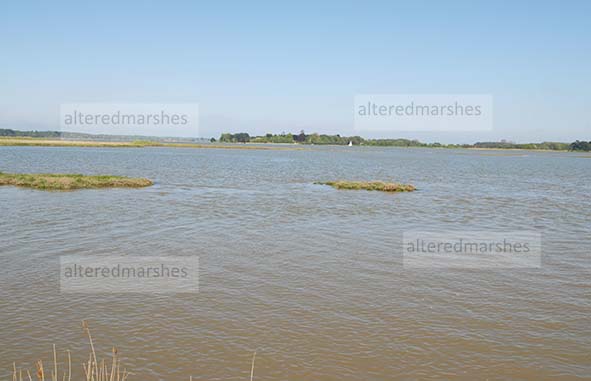
Another peaceful area, observed on a regular basis is the freshwater nature reserve, on Iken marshes, below the Alde Ore mud flats. Bearded Tits inhabit the Reed beds and Lapwings, nest on the marshes in the summertime. Embankment clay flood defences separate the estuary from the reserve and provide a useful example of how established saltmarsh can mitigate wave action. It is also possible to see, where the embankment is not fronted by saltmarsh, the high tide level marks, and how erosion of the concrete revetment could wear away at the base of the flood defence.

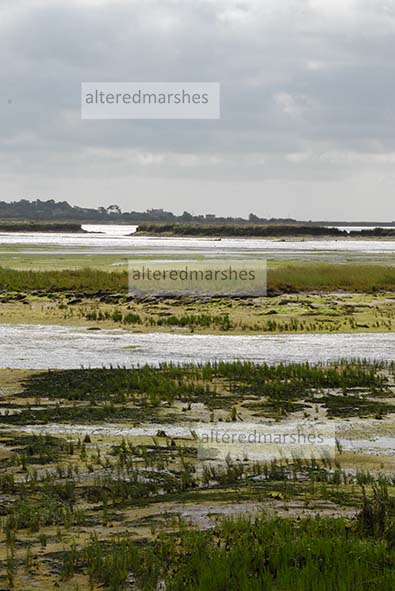
Finally, Hazelwood marshes provide a constant inspiration, a thriving intertidal nature reserve, whose growing biodiversity and sediment accretion, develop in the former freshwater channels and on the raised nesting islands built for nesting avocets and shell ducks and spoonbills. Erosion can be seen on the path near the bird hide.
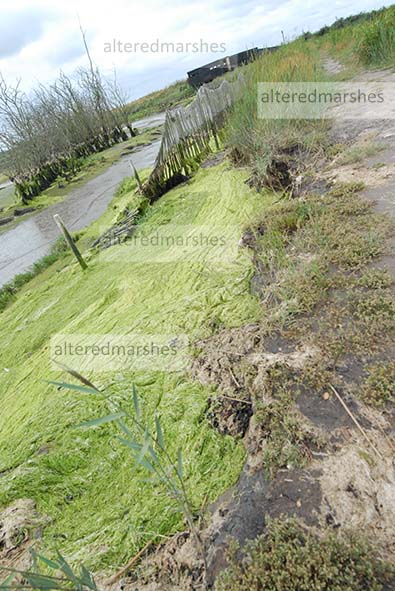
However, new growth of saltmarsh can be seen on the main marsh, which could contain wave energy on the marshes.
The features of each area continue to provide interest and are worthy of continued observation, but one factor that has been present, that has not yet been discussed, is the tidal prism and the velocity of the tides. Additionally, wave heights in the open sea, and how these could impact the coast and the estuary, are also relevant to observations of coastal erosion on the Suffolk coast. The term Tidal Prism refers to the volume of water that enters and leaves an estuary with the rise and fall of a tide. The velocity of the tides describes the currents and the energy of the tides as they ebb and flow. Wave heights out at sea, at specific points where they are monitored, can also give an indication of how under storm conditions, wave activity could move shingle, altering beach structures, and contribute to erosion. Therefore, the focus of the blog in the near future, will be to examine the characteristics of the tides, in the estuary and the open sea, and discuss how these elements shape the areas under observation.


 alteredcoast