
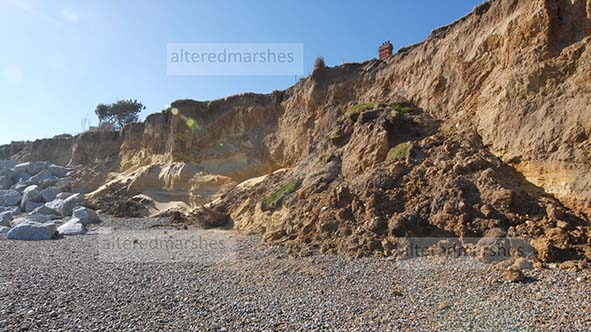
Severe erosion continues at Thorpeness beach, particularly on the section of beach below North End Avenue. The most noticeable features include substantial damage to flood defences, a loss of material and retreat of the cliff face, scouring at the base of the cliffs and a significant loss of shingle.
Flood defences have been in place on the beach frontage, 250m south of Red House, since the 1970’s in an attempt to repel the destructive wave energy directed at this section of beach. At the beginning of the year, there was evidence of scouring around the edge of rock cages installed as flood defences and in some places, the cages had been pulled apart. However, recently with a loss of shingle in front of the defences, they have lost their solidity, with big gaps where there used to be firm continuous defences.
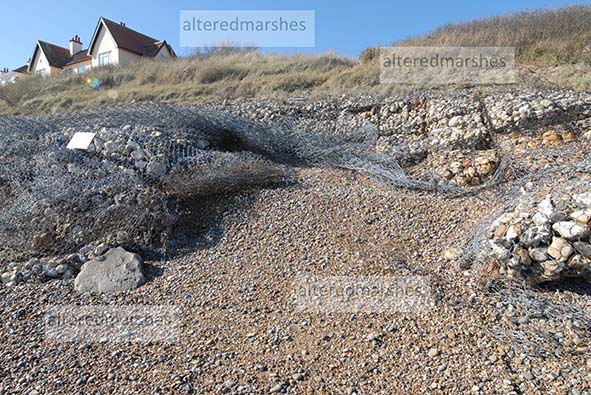
The effects of sculpting by wave action, leading to sand drifting from the cliff face, is a contributory factor to loss of material from the cliff frontage below Red House. In addition, land slips from the cliff face regularly occur. In the photo below, patches of turf, possibly from gardens above can be seen following a recent fall of cliff material.
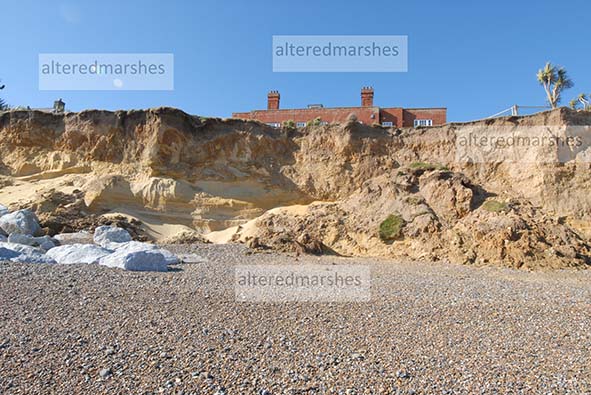
The retreat of the cliff line reveals the increasingly perilous position of several significant properties positioned on North End Avenue, near the top of the cliffs.
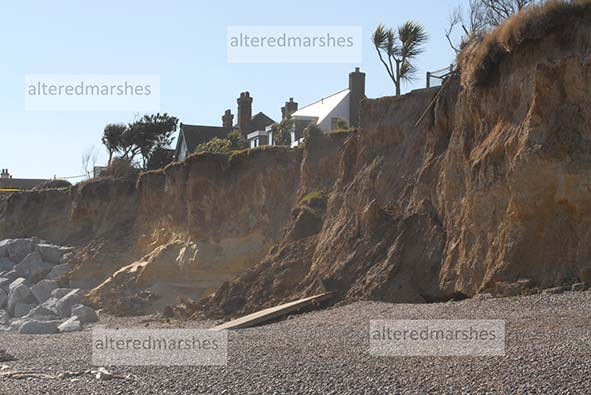
Scouring at the base of the cliffs, is also quite extensive. This could weaken the cliffs further, potentially leading to further falls along the cliff frontage.
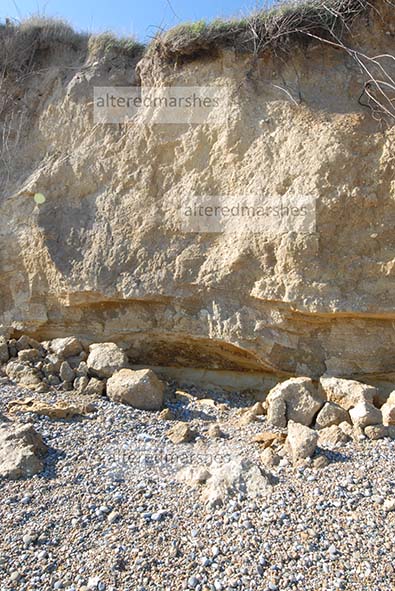
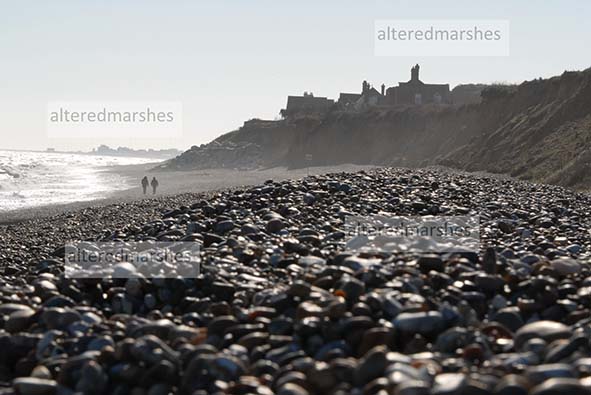
This vulnerability is exacerbated by the apparent stripping away of shingle from the beach. Thus removing any feature that could dissipate the energy of the waves before it hits the cliffs. A longer view down the beach from a ridge of shingle shows the erosion of the cliff frontage, the houses on North End Avenue and the recently installed rock revetment flood defence, with the Aldeburgh coastline in the background.
As was discussed in the post Elements of Erosion, the shifting of shingle, both off and around the beach, isn’t the only erosive process occurring at Thorpeness. But the wider question of sediment transport is a significant process driving the erosion of this section of coastline. The mechanisms and features driving this process iswill be considered in future discussions.

 alteredcoast