
Anyone who has been among mountains knows their indifference, has felt a brief, blazing sense of the world’s disinterest in us. In small measures, this feeling exhilarates. In full form, it annihilates.” –
Quote from film Mountain.
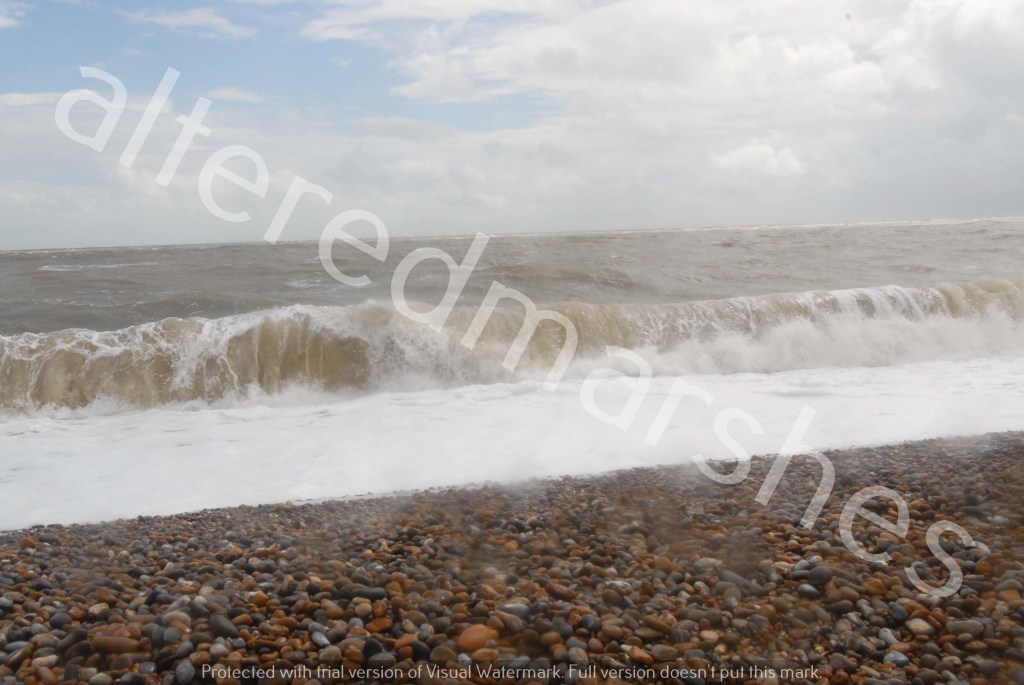
The sea inspires fascination, its otherness captivates and evokes awe and a sense of calm. But it is also a wild, phenomenon governed by natural influences, independent of people and homes and daily life. Storms like the 1953 surge, are a concern, because they remove the distance between humans and the weather. Normally, the weather happens around us, but it doesn’t directly impede daily life, or place people, and homes in peril. Storms operate as a natural force, acting according to rules, which may align with the laws of physics and meteorology, but operate with a force and ferocity, incomprehensible to humans and completely indifferent to their presence.
Analysis by Wadey, Haigh, & Nicholls et al. identify particular characteristics that made the 1953 storm so destructive. The Low-Pressure epicentre, (known as Low Z) (Pollard, 1977), which at one point, dropped to 964 mb, produced extremely strong northerly winds over the North Sea. The storm’s trajectory from Ireland to Europe, featured an abnormally slow journey to the coast of the Netherlands. This created a lengthy north-south wind system over the North Sea, widening the area in which the wind could generate waves. This strengthened storm surge formation, and gradual amplification of northerly winds severely enhanced wave heights causing the sea state to deteriorate further. These conditions hit East Anglia severely because the rotation of the earth, deflects water to the right of tidal currents. As tide and surge travel in a southerly direction, the height of both, and shallower bathymetry (depth) in the southern North Sea, push large volumes of water towards its coastlines.

Ferocious conditions on the night of the 1953 storm, set the scene for the assertion in the book North Sea Surge, by Michael Pollard, in which he writes:
“It is not journalistic fancy to write that the North Sea went mad on the night of 31st January 1953”
It is also claimed the insane rage of the North Sea had a return period of around 1-3000 years in some places. With a storm of such a size, and intensity, how can humans be expected to develop comprehensive, resistance, with warnings and defences to manage such a force of nature. Especially as Michael Pollard also writes that for several hundred years, at least, it has been very difficult to know without consulting maps and records, and sometimes, even then it is not clear where sea and land begin and end according to early archives. History has always told of a constant battle between land and sea.
It is perhaps, then not useful to draw inferences with today and the preparedness of coastal areas for future storms, by considering insights from Pollards book. In which he writes that tides can be predicted years ahead with some accuracy, but surges, tend to disrupt this accuracy. Reports describe how the inner landward facing walls of embankments failed, enabling the sea to overcome communities from the rear, sometimes many hours after sea facing defences many miles away had withheld the sea.
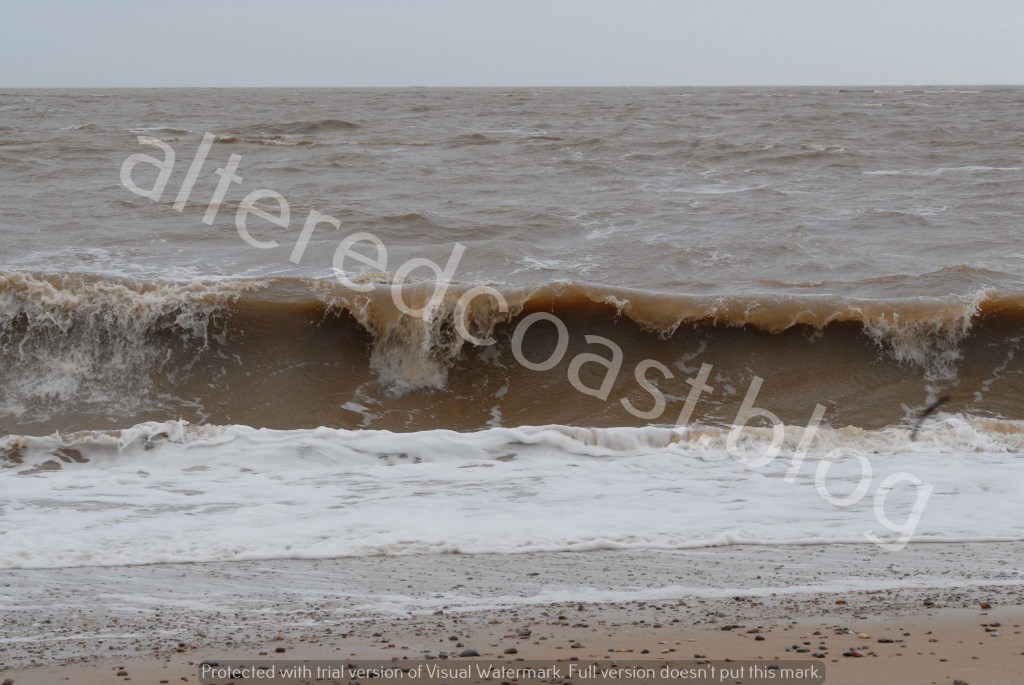
In the days before the storm, observers, noticed the tides were not completely leaving the estuaries, before the next tide came in. It was also said the motion of the sea seemed strange, and there were concerns about winds. In parallels with today, concerns exist about the robustness of clay embankments and flood warnings regularly refer to the tide locking affect, when the previous tide is preventing from leaving as the next high tide comes in.
The wildness of the sea, came crashing through people’s doors without warning on the night of 31st January 1953. The magnitude of a storm of such severity invokes a constant tension between balancing the perception that coastal conditions can be made measurable and manageable. With the awareness that the enormous violence of storms makes them unpredictable, with communities increasingly aware of the restless, unruly neighbour, that dominates the coast.

The insights from Pollards book that describe the behaviour of the sea before the night of the storm, suggest that perhaps part of remembering the storm surge of 1953, is a realisation that there are natural systems and processes, the strength of which we do not totally comprehend. Phenomenon we can never totally get the measure of.
The characteristics of the 1953 storm described above, describe the basic meteorological conditions for the storm. But they don’t describe the human story of how communities comprehend the feeling of the raw fury of the sea and its indifference. People who lived through the 1953 storm, convey the sense that a grave injustice surged through streets once thought familiar and safe. Leaving a tragic, indelible memory of broken homes, boats and dampness in the walls that cannot be removed.
The 1953 storm was a severe assault on the coastline and the people and animals that live along it. Storms and high seas have plagued the North Sea Coastline for hundreds of years. In 2013, a storm which equalled if not exceeded the extreme conditions in 1953, hit the North Sea coast, only this time damage was not as severe as defences and warning systems were much more advanced. But on the dynamic, storm driven, East Anglian coastline, it is still perhaps, the unknown power of storms, indifferent to their effects, which prove that you can never underestimate the power of the sea.


 alteredcoast