

This discussion is the second of a series, to debate whether big events, such as surges or high waves, or smaller gradual processes, cause the most erosion. This second conversation will look at erosion at Hazelwood Marshes in the Alde and Ore Estuary and Sudbourne Beach on the open coast. These areas have been selected because they provide examples of both small- and large-scale erosion. To frame this discussion, an initial definition of erosion will be used that describes it as a process that takes away physical substances, from the earth’s surface, mainly earth, sand or shingle and conveys this sediment by weather driven process’s such as wind or water from the focal point being eroded.
To begin with a consideration of Hazelwood marshes, it is necessary to acknowledge an immediate contradiction in the context of a discussion of whether erosion is caused by large- or small-scale events. As anyone who knows the history of Hazelwood, knows the reserve used to be a freshwater marsh, but was made intertidal on 5th/6th December 2013, when a large storm surge, caused the embankment flood defences to breach, leading to a permanent inundation of sea water into Hazelwood marshes. Therefore, it could be said that it is case closed, it is the large-scale flood events that cause severe erosion.
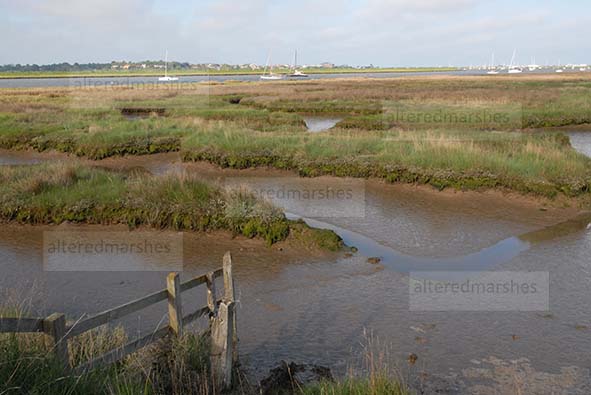
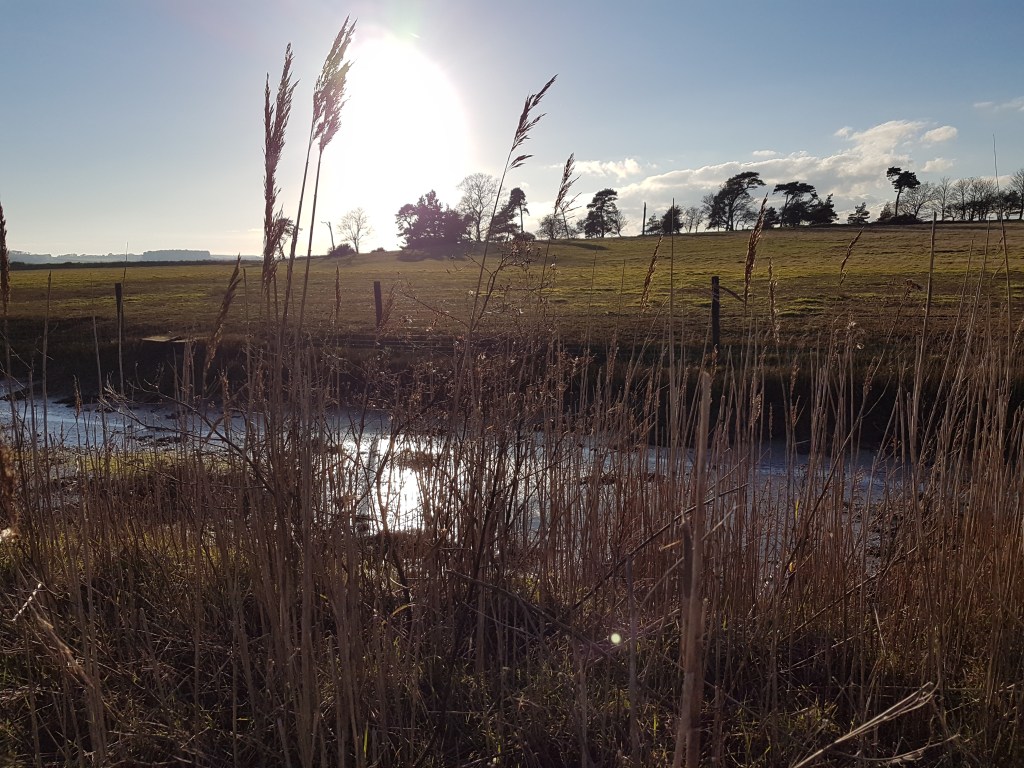
But in the case of Hazelwood, since the storm surge breach in 2013, it could also be said it is the gradual, small actions of waves, that could be significant. When you walk along the raised path to the bird hide at Hazelwood, when the tide is coming in, there is a noticeable change as the tide water which has been silently creeping in begins lapping at the side of the bank below the path. It is this constant movement, the tiny incremental expressions of energy, that could be said to be nibbling away at the banks on the reserve.

In the last few months, Suffolk Wildlife Trust who manage the reserve have removed a line of dead blackthorn trees and scrub scoured by intertidal salt poisoning. The materials were removed so they could be used to help support the structure of the path to the bird hide and infill some eroded sections. Erosion of the grass banks at the back of the reserve, below the holiday property, Marsh View is also visible.

It is also noticeable how high the tide line appears to be, continuing the discussion of whether it is significant high water or the gradual actions of waves, that is causing the most erosion at Hazelwood.

At the open coast at Sudbourne Beach, it is a more complicated picture. The coast is currently separated by a narrow shingle ridge from the Alde & Ore estuary. On the first section of shingle ridge from the Martello Tower towards Orfordness, various flood defences are deployed, such as concrete mattresses, concrete blocks, and large boulders. However, beyond a certain point, the flood defences stop, and the shingle continues without further defences.
The processes of erosion are two-fold. Above the various flood defences, there is significant scouring into the top of the shingle path, making it quite narrow to walk on. Proof, if it were needed, that the North Sea has never had much respect for flood defences.

However, on the section of shingle not protected by flood defences, the shingle ridge has been pushed quite far back and there is evidence of a recent breach at the top of the ridge that separates the beach from the Alde & Ore estuary. It is likely this breach occurred during the high tides in January and February 2022.

To consider the erosion at Hazelwood Marshes and Sudbourne Beach, it is useful to further develop the definition of erosion discussed above. Whilst it is clear that sediment is being removed from the specific areas discussed, it could be said there is also a process of altering, noticeable losses of solid structures.
Therefore, to conclude the second debate in this series, to consider whether erosion is caused by large scale or small processes, the conversation could simply be a discussion about stages of damage. The incremental continuous damage to coastal features or the sudden forceful visibly recognisable events that create a hole or a channel through a seemingly firm feature. Assessment of this damage, as a one-off specific occurrence, or the culmination of damaging processes, could frame an evaluation of the significance of erosion in vulnerable coastal areas.









 alteredcoast