Mark of The Storm

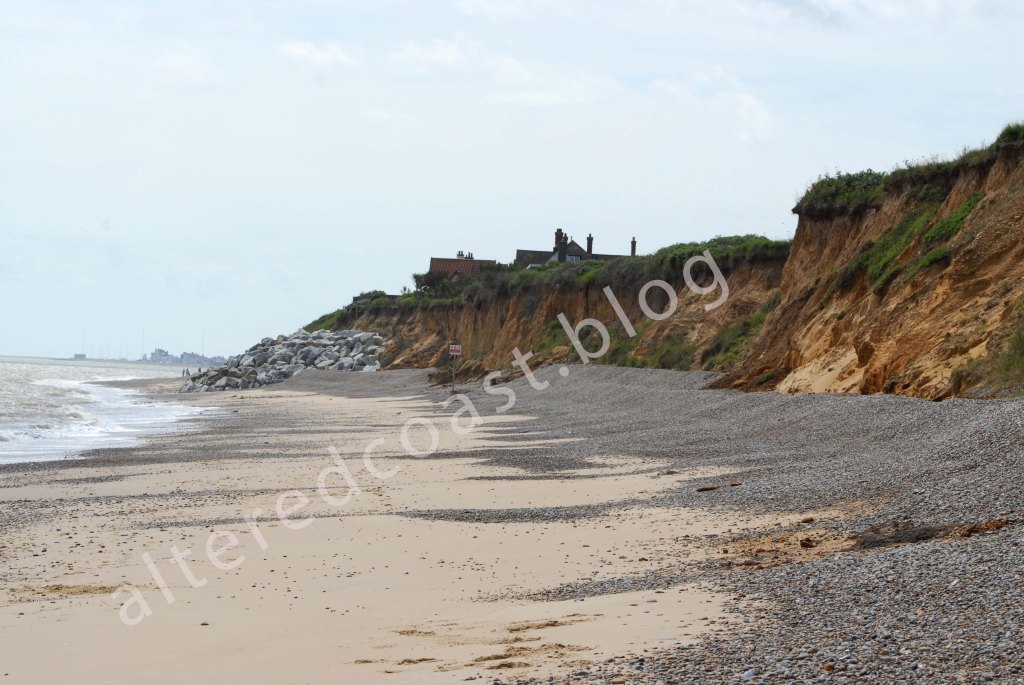
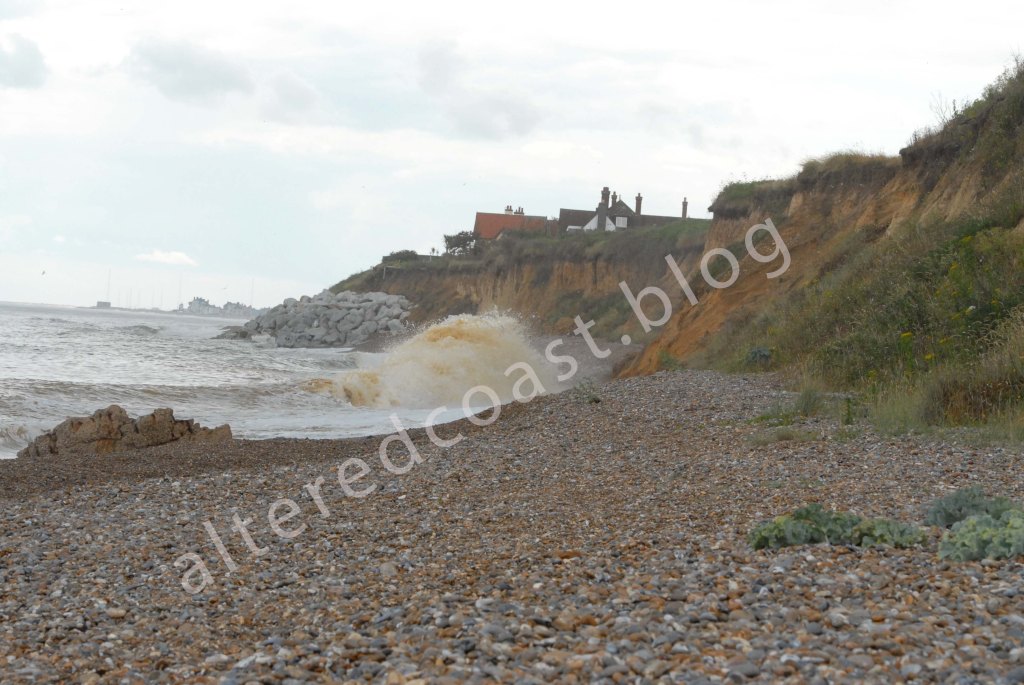
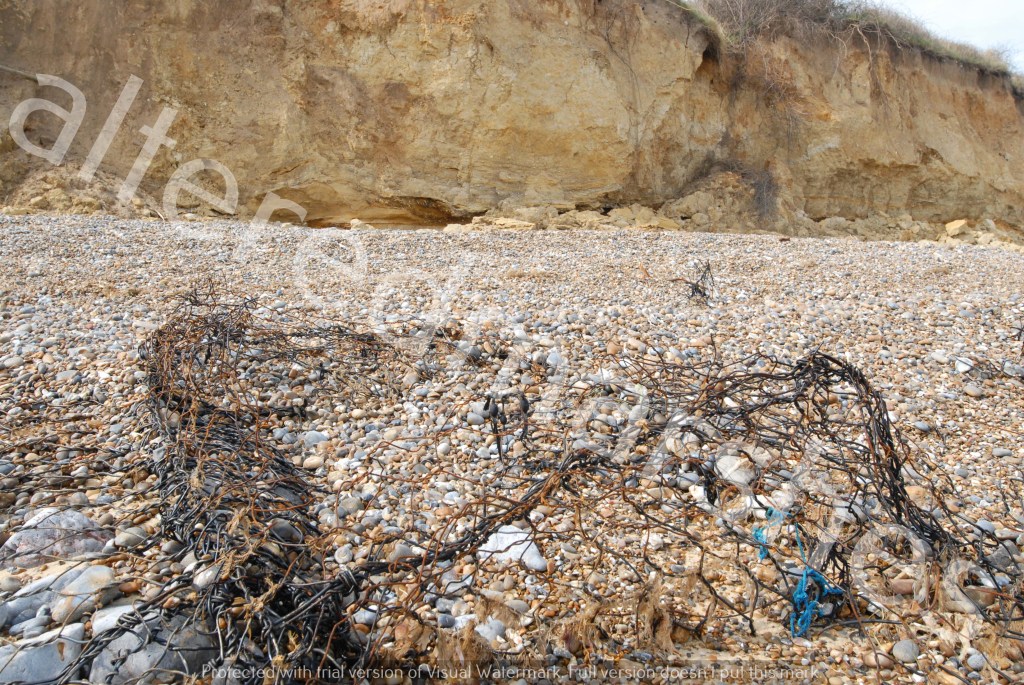
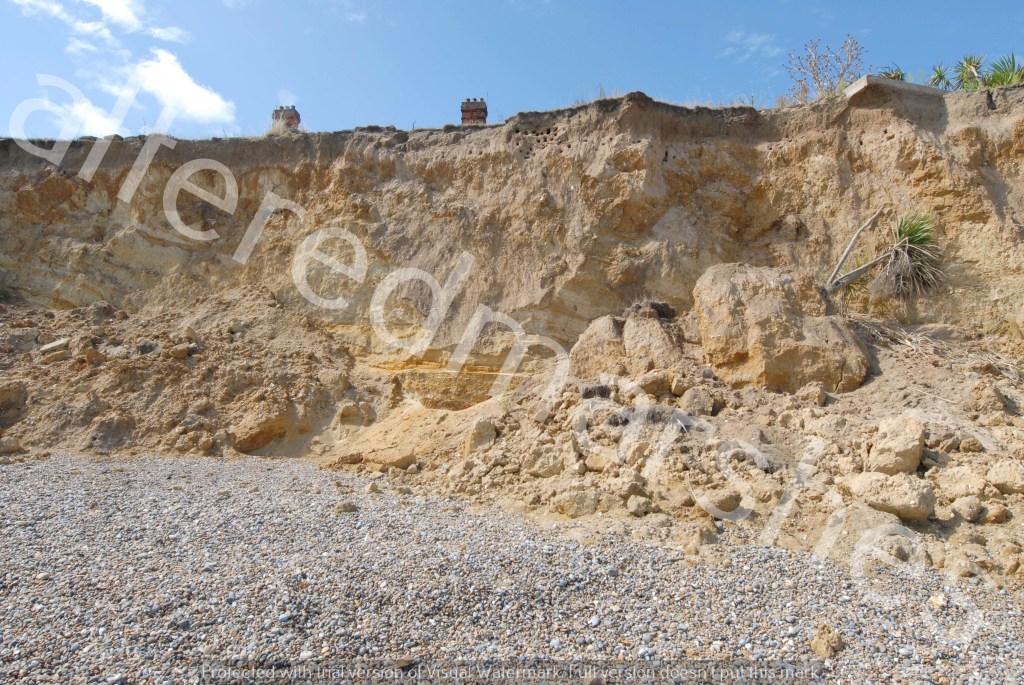
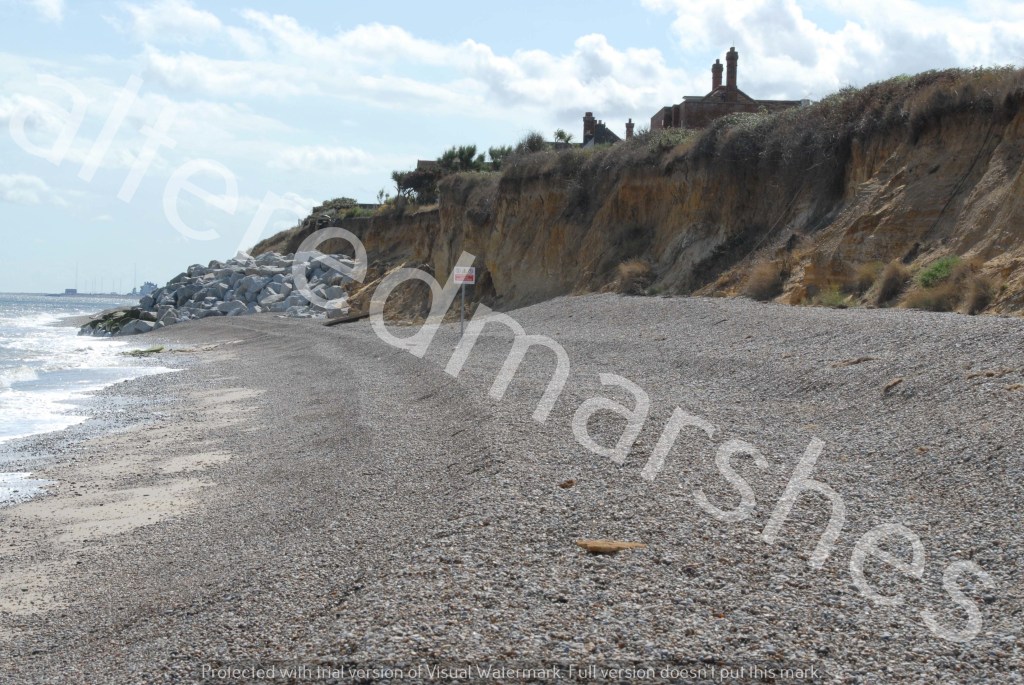
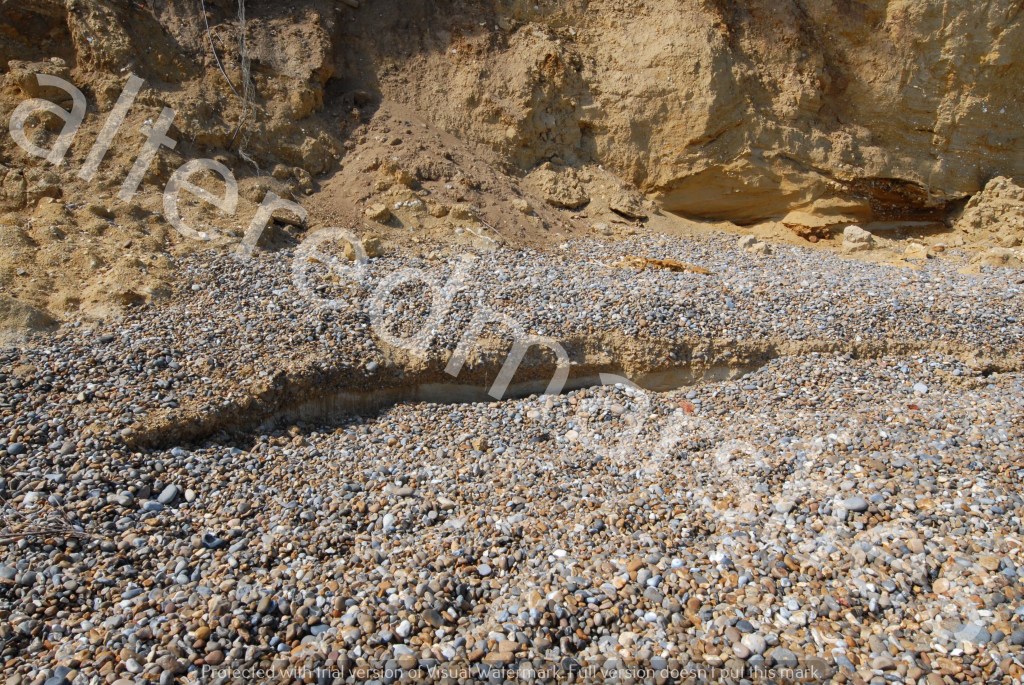
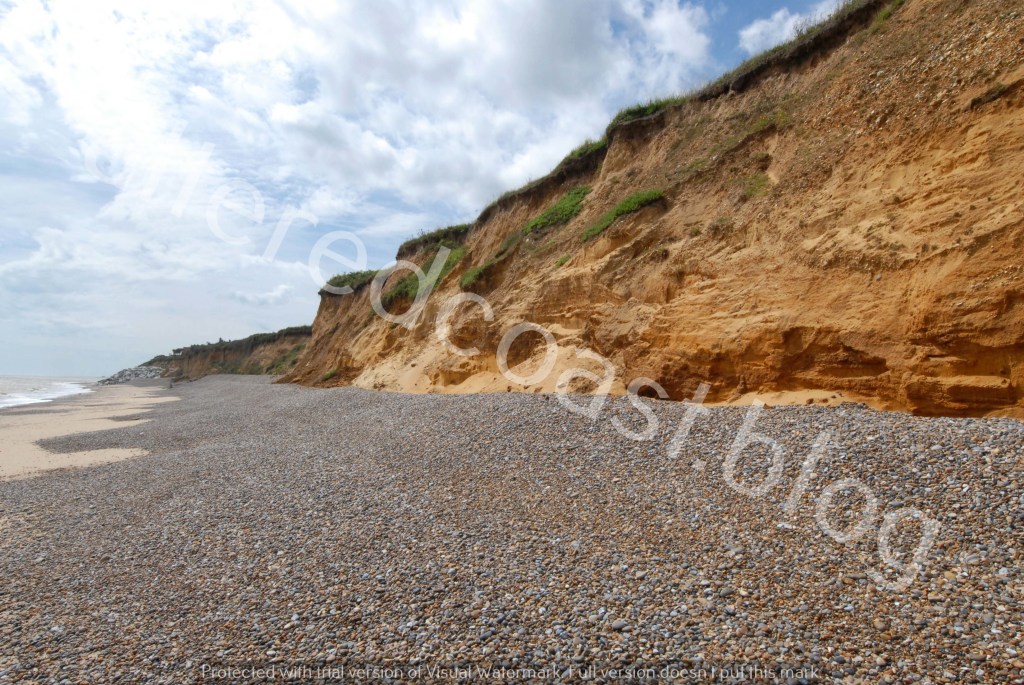
Erosion of cliffs below North End Avenue, next to Rock Revetment Flood Defence. Thorpeness Beach 5th November 2023.

As storms continue to batter the East Anglian coast, this discussion will consider marks left by storms Babet & Ciaran on two beaches in Suffolk and ask how useful it is to examine erosion through the lens of the Palimpsest. The term refers to how a surface or feature, when something new is added, continues to display residues of what was there before.

Firstly, data for Significant Wave Height (SWH) at Lowestoft recorded the highest values to date for 2023 during Storm Babet and Storm Ciaran. The SWH Storm Alert Threshold for Lowestoft is 3.11 metres. During Storm Babet, SWH was slightly below this and for Storm Ciaran it was noticeably above it.

Data provided by https://coastalmonitoring.org/, The National Network of Regional Coastal Monitoring Programmes, funded in five-year cycles from DEFRA and administrated through the Environment Agency.

The Tpeak(s) or Dominant Wave Period, (DWP) is the period where the highest wave energy is centred. It is interesting that the DWP is the same for both wave heights. Particularly as the same DWP was also recorded for the highest SWH in 2022, during a storm on 31st March, when a SWH value of 4.10 metres was registered.

It is also worth noting that the highest value for Significant Wave Height was also recorded at Happisburgh, during Storm Babet on the 20th October. A SWH of 3 metres was registered, with a Dominant Wave Period of 6.2. The Storm Alert Threshold at Happisburgh is 2.74 metres.

Data for SWH has been considered because it enables an insight into the turbulence of the sea. It also provides the first noticeable signs of repetitions or noticeable exceptions. Patterns of wave behaviour that indicate continuity or require a new understanding, that learns from and develops, what has gone before. The first consideration of the usefulness of Palimpsest.

This term is discussed in a doctoral dissertation by Alison Stoneman, titled Holding The Line: contemporary poetry of British coastal change. PhD, Nottingham Trent University. Stoneman critically analyses Coastal Erosion poetry, and refers to storm damage on beaches, as sheets of features, that add to and alter marks left by storms before. Following storms Babet and Ciaran, erosion features of Thorpeness Beach and Sudbourne Beach in Suffolk were observed and will be considered through the lens of Palimpsest.

To start with Thorpeness, it might be quite straightforward to consider the framework of Palimpsest as a useful approach to analyse erosion at this location. As observations of erosion on the cliffs, show recent changes set in the context of the geology of the Pleistocene. Even though the beach changes quite dramatically, remnants of what has been laid down previously still show through. This is particularly relevant when considering the Pleistocene and the Palimpsest. As a couple of the poems analysed by Stoneman refer to Doggerland, a stretch of marshland that stretched between England and Europe, that was inundated by the sea at the end of the last ice age.

Observing current erosion through the lens of Palimpsest, is also useful as it enables a consideration of recent erosion and how this has affected the cliffs differently. Elevated wave action can scour the base and lower portion of cliff surfaces, stripping the surface and causing sediment to slump onto the beach.

At Thorpeness erosion of the cliff frontage, in the last 5 or 6 months has shifted further up the towards the Ness, at Thorpeness. The surface has been partially stripped of the vegetation and glacial til and fossilised remains and this has left bare sand which has been sculpted by wave action. However, the area of beach that has been spared recent erosion has been freshly eroded by Storms Babet and Ciaran. But because it had been stable for a few months prior to this, the glacial till/fossil sediment is still visible on the surface of the cliff and slumped sediment.

Cliffs showing different stages of erosion. Thorpeness Beach 5th November 2023

The next location, Sudbourne Beach provides a different setting in which to consider the Palimpsest. It is a high-energy shifting shingle beach, and in such a dynamic area, it is hard to identify threads of current and past coastal change. Recently, the ridge at the back of the beach has flattened with an extensive wide area of shingle showing signs of overtopping with shingle washed by waves into two tongues down to the marshes. The shingle fan stops short of the waterway behind the earthen flood defence that protects the River Alde.

Flattened shingle showing signs of overtopping by the North Sea to marshes behind a previously protective shingle ridge. Remnants of ridge are visible in immediate foreground of photo. 5th November 2023.

On Sudbourne Beach, it could be hard to see the accumulation of coastal features, intrinsically linked over time, it is only possible to see the effects of what Gillian Clarke’s poem, Cantre’r Gwaelod’, describes as the ‘indifferent hunger of the sea’. Whilst it is possible to see the remains of the Shingle Ridge as it was and the smaller shingle ridge that runs the length of the back of the beach, it would seem to be a coastal location that is very much ‘coming into being’. It would be difficult to identify landmarks that provide clues to the trajectory of the coastline.

Long view of remains of shingle ridge with Alde Ore estuary and North Sea. Sudbourne Beach. 5th November 2023.

But perhaps, such locations should be seen as wild places, seascapes governed by natural forces, especially at a time of storms of increasing severity. Use of the approach of the Palimpsest, could provide tools to look through the local, forceful, intense action of Wind-Wave Storms. According to Stoneman, each erosion feature is distinct, but through its characteristics, relates either by its location or by its form to earlier examples. Use of the Palimpsest as a vehicle to see through erosion and sea state to create methods to interpret future marks of the storm.
Shape of a Beach

Erosion of Cliff Face. Thorpeness Beach 11th August 2023

Recent visits to Thorpeness have revealed new erosion features, possibly exacerbated by extreme high waves observed in early July 2023. However, rather than focus on features on the cliffs and beach, this discussion will consider the nearshore processes likely to influence the shape of a beach.

Cliffing erosion into Shingle . Thorpeness Beach 11th August 2023

A local feature known as the Sizewell-Dunwich Sandbank system (SDBs), will be used as a framework to analyse the complex shifting systems that shape and remake this coastline, as no feature remains stable for long. The SDBs are the most enduring feature, but historically they have changed position and size and continue to do so. This section of coastline is a dynamic, fluid environment, with its nearshore characteristics, still unclear beneath the waves. Therefore, this discussion will debate existing analysis of nearshore characteristics, alongside recent photos of erosion and high waves.

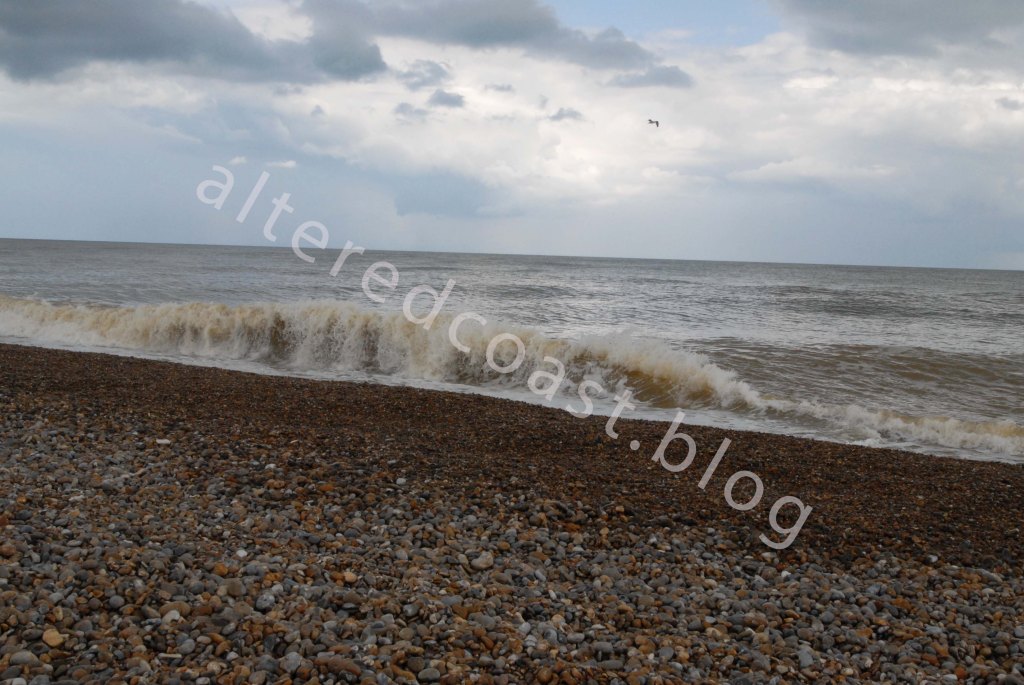
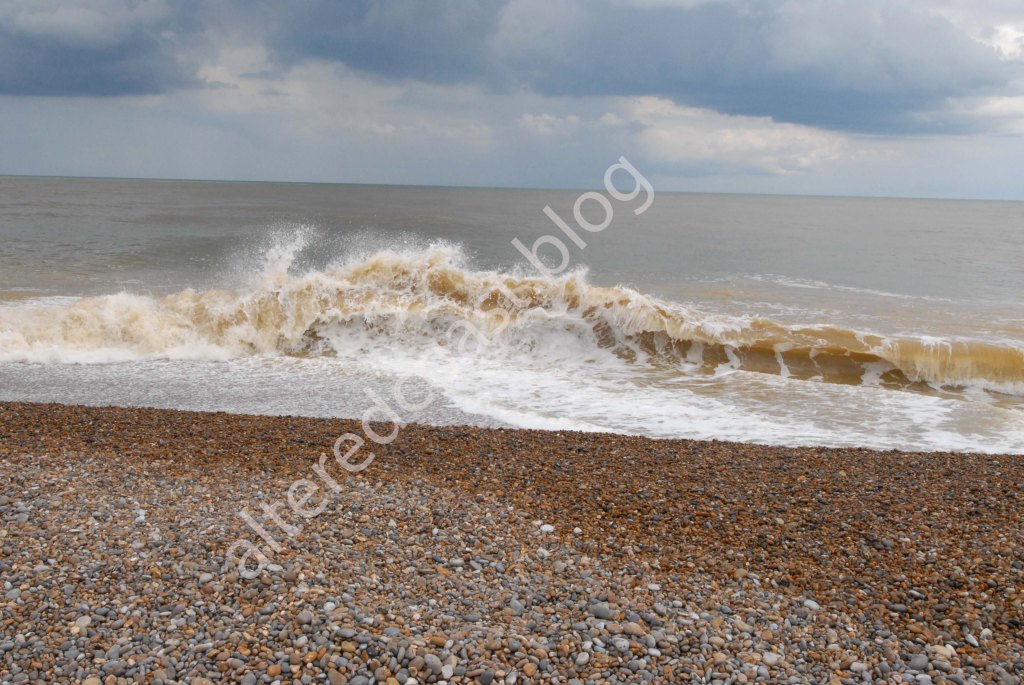
High Waves arriving at Thorpeness 5th July 2023

The first system to be considered concerns a model to assess the effects of sediment transport, tidal flows, and wave heights on the SDBs. Regarding sediment transport, Bedload, refers to how sediment is carried by water and bounces along the ocean floor. Suspended Load describes how sediment is picked up and retained within the flow of water. For both methods, it was found tidal flows cause a conjunction of sediment transport, on Sizewell Sandbank. With sediment flowing along the landward side of the sandbank in the tidal flood flow and deviating in a seaward direction to join sediment transported in the tidal ebb moving up from the south.

Along the coastline of Thorpeness, the tidal flood is thought to run in a southward direction, almost parallel to the coast. Tidal currents attain greatest velocity 5 hours before high water, at 0.67 m s-1 on spring tides and 0.31 m s-1 on neap tides. Tidal ebb flows run almost south to north attaining greatest velocities 1 hour after high water, 0.72 m s-1 on spring tides and 0.36 m s-1 on neap tides.

Given the propensity for sediment to travel northwards from Thorpeness, it is interesting to note higher velocities for the south to north ebb flow of the tide. This could be significant if a strong high tide, stirs up significant amounts of sediment on the beach. Particularly as sand from Thorpeness is thought to be transported to offshore sandbanks, whilst shingle is retained on the beach. This relates to beach profile, as larger wave heights can remove fine grain sediment lowering the beach level, whilst shingle is pushed in steep ridges to the upper beach. 

Beach showing the intertidal zone stripped of shingle while ridges are piled up in Supratidal Zone. Thorpeness Beach 11th August 2023

This moves the discussion onto systems of wave action. A study ran model scenarios for different wave heights arriving from a North Easterly direction to assess the impact on the Sizewell Sandbank. In most examples, sediment accumulated on top of the Bank, whereas erosion occurred on the southward side. But in instances involving the biggest waves, the top of the Sandbank also became subject to erosion.

However, on this unstable shifting coast, it is useful to bear in mind that sediment transport can also be heavily influenced by wave direction. Whilst it is thought Thorpeness stands out as an unusual example of Northerly sediment transport on a coastline dominated by Longshore southerly transport. It is also the case that Southerly waves usually result in Northern sediment transport, and Northerly waves usually result in sediment transport in a Southward direction. Wave direction can also be cyclical, with Southerly waves dominating in one season and Northerly in another.   

It has also been thought historically, that Thorpeness retains a layer of resistant Coraline Crag, which underlies the beach geology and stretches out from below North End Avenue towards the ‘Ness’. It is believed this has sustained the headland and the Sizewell Sandbank.

In relation to these points, a disturbed section of water that indicates the presence of Nearshore Sandbanks, can be seen near the location of the promontory of the Ness and Thorpeness Beach.

Line of disturbed water indicating sandbanks. Thorpeness beach. 3rd July 2023

However, a photo taken a few days later in July, shows High Waves, probably caused by a combination of the Supermoon and Storm Poly, with the waves originating from a North Easterly direction. However, it is not possible to identify the line of disturbed water indicating the presence of the sandbanks.

High Waves arriving at Thorpeness Beach. 5th July 2023

But studies have found nearshore sandbanks at Thorpeness can attenuate (lessen) wave energy from NE waves. A study on Wave Refraction also outlines the importance of the sandbanks in reducing wave energy.

Whether the resistant layer of Coraline Crag is still holding firm, recent photos of erosion of the backshore seem to show exposed layers of darker rusty, red lumps of sediment pulled from the cliffs alongside Scarp erosion into the base.

Scarp erosion into cliff face and darker lumps of maybe Norwich or Red Crag exposed. Thorpeness Beach. 11th August 2023

Additionally, recent erosion at Thorpeness, seen in the photo at the top of this discussion, shows erosion seeming at times to shift south to north along the cliff line. With waves arriving at different points on the beach compared to previously.

High Waves on Thorpeness Beach 5th July 2023

There are many contributory factors that can influence erosion features and patterns of wave energy arriving at a beach. A model to assess sediment transport, tides and waves, identified an area of increased Bed Stress in the nearshore at Thorpeness beach. With sections also apparent on the eastern and southern areas of the Sizewell Bank.

Bed Stress refers to abrasion applied by running water on the Seabed. Additionally, Bed shear-stress is created by a combination of waves and currents, that contain disorderly boundary layers that intermingle in a manner in which one element does not automatically follow another. With the water motion described as forceful for beds consisting of sand and gravel. It is also thought the ability of the subtidal platform in the nearshore at Thorpeness to reduce wave energy is lessened and sediment fluidity increases at this location.

Thorpeness sits on an extremely active coastline. With rapidly changing nearshore processes with its bathymetry (profile), interacting with tides and waves to shift and erode sediment. In a high-energy system which can be made more forceful by the powerful influence of weather systems. In a destructive forceful interplay, that leaves its mark, and can forever alter the shape of a beach.

High Waves arriving at Thorpeness Beach. 5th July 2023

Sandbanks, Tides, Erosion

Hemsby Beach, looking from Hemsby Gap towards Winterton Ness. Photo Courtesy of Hemsby Beach Cafe

This discussion continues to look at severe erosion at the coastal community of Hemsby in Norfolk. Previous discussions considered Scarps and the effects of Lowering and Steepening on a Beach profile when the Sea Comes In. This latest discussion will consider how the tides, sandbanks and beach interact in a mobile, fluid environment on a fragile coastline.

The coast as a living feature, will also be explored using a process called Transgression. A mechanism whereby a coastline to compensate for an increase in sea levels due to beach lowering and reduction in width, reclaims land space by eroding into sand dunes to attain a new breadth and elevation.

The mechanism of Transgression is described in a report prepared in 2018 for Great Yarmouth Council, entitled Hemsby Coastal Management Report. It discussed possible solutions to erosion at Hemsby, following severe storms after the Beast from The East in 2018. The map below gives a rough indication of the location of the Sand Banks in this discussion. Although the paper from which it was sourced was written in 2007.

Map showing Great Yarmouth Sandbank System, sourced from Morphodynamic behaviour of a nearshore sandbank system: The Great Yarmouth Sandbanks, U.K.
lJosé M. Horrillo-Caraballo; Dominic E. Reeve

Key assertions in the report suggest a relationship between a feature known as Winterton Ness, and the area south of Hemsby Gap. With particular focus on the Caister Shoal Sand Bank which follows the line of the coast from Winterton down to California. Although the exact nature of the relationship is unclear, the presence of a deep-water near shore channel that runs between the Caister Shoal Sand Bank and the shoreline suggests a tidal flow pathway.

Particularly regarding alterations, leading up to 2011, when a swift sizable build-up of sand was observed on the sea ward side of the near-shore sand bank. This accumulation shrunk the cross-sectional area of the sandbank, causing it to move closer towards shoreline, reducing the width of near shore channel. The land facing side of Sand Bank is also the sea-facing side of the shoreline at Hemsby. Restriction in the width of near shore channel, led to cutting into the landward side of the Sand Bank, which focused higher tidal flows of deeper water further towards the shoreline.

This process restricted the area available for beach recovery, as increased erosion, caused beach retreat. To reclaim this restriction in space, the sea eroded into the dune system, to regain space to enable a more natural beach to develop at a higher level.

An abnormal tidal environment is also said to exist between Winterton to Caister. Normal Flood Tide flows North to South, and Ebb South to North. This creates a sizeable difference in tidal elevation and current speeds in both directions, forming a ‘Head’ of water between Winterton and Caister.

Map from the Hemsby Coastal Management report showing the Normal Flood and Ebb Tides in the North Sea and the flows round the Great Yarmouth Sand Banks.

Regarding the tidal regime between Winterton and Caister, average tidal current velocities are thought to reach a maximum around 4 hours before High Tide at 1.75 m/s on Spring Tides and 0.98 m/s on Neap Tides. Regarding the Ebb Flow, average velocities reach a maximum 2 hours after High Tide, 1.45 m/s on Spring Tides, 0.82 m/s on Neap Tides.

Residents from Hemsby have observed that a Sandbank can be seen 50 yards out from the shore, this pinches the flow of tide which accelerates to this point. A recent video taken by Hemsby Beach Café, could indicate the location of a near shore channel on Hemsby Beach.

It has also been observed that it doesn’t take much to cause damage, an easterly wind, a reasonably high tide along with low pressure lifting up the sea. Recently on 11th June 2023, a notice from Great Yarmouth Council warned of metal and concrete debris exposed on Hemsby Beach, in front of the Gap area, currently protected by large boulder blocks. This followed High Tide which covered the beach area at Hemsby Gap. In addition, only one line of dunes remains on The Marrams, with around 300 metres of sand estimated to have been lost since 2013.

One interesting point concerns the extent of erosion over time and whether a marked increase occurred prior to 2011. The time a noticeable accumulation of sand was observed on the seaward side of the Sand Bank. Residents assert that due to extreme winds early in the 1990’s, 12 foot of sand was stripped from the beach, and it hasn’t recovered since. It would be interesting to consider why sand lost in the 1990’s was not restored and retained on Hemsby beach.

Hemsby residents often say that they didn’t think a storm would be as bad as it turned out to be. This discussion considered living features on the coast, which could exacerbate the damaging effects of a storm. Regarding solutions, the report favours installation of a Rock Berm, planning permission has been granted, but funding is still to be sought. Nevertheless, a solution would seem to be needed. To enable both the living coast and the community with its life on the Marrams to coexist in this dynamic, living, breathing sea scape location.

When The Sea Comes in

Scarp cut into sand behind rocks at Hemsby Gap after storm on 20th April 2023

The precarious position of homes on the Marrams in Hemsby has been highlighted in a BBC documentary Life on The Edge. The vulnerability of the community on this coastline was exposed again when a storm on 20th of April saw waves cut into the sand behind rocks newly placed to try and stem the erosion. On the night of 20th April, waves were observed at 3 m high, with a lot of damage done before the peak of high tide. The BBC reported that around 4 metres of the sand ramp intended for use by Hemsby Independent Lifeboat was washed away.

The Scarp created was around 10 ft, but this erosion event was simply the latest in a series of severe episodes in the 10 years since 2013, when 20 ft waves scoured a considerable amount of beach and dune material with the loss of seven properties on the Marrams. In fact, in the BBC documentary, Life On The Edge, retired fisherman from Hemsby, Kenny Chaney says that the combined effect of two hurricanes in 1991 and 1993, lowered the beach surface by 12 ft, and the beach has never recovered. Therefore, this discussion will consider the likelihood of increased erosion on beaches considerably lowered by years of wave action.

Three photos taken in 1993, 2013 and 2023 show how much of the beach at Hemsby Gap has been eroded. In 1993 a large sandy beach is shown, with the shoreline around 40 metres from Hemsby Gap. In a photo taken in 2013, it is clear how much sand was scoured from the beach, interestingly a ‘cliff’ or Scarp also appears to be starting to form across the Gap. The final photo in 2023 shows Hemsby Gap after the erosion in February 2023 with the 10 ft Scarp across the Gap. Photos credit of Great Yarmouth Mercury and photographer Mike Page.

To consider the effect of sustained attrition by wave action, the discussion, will consider two points. Firstly, how the profile of the beach has changed, and once waves frequently cover a beach how waves interact with beach structures and the toe of the dunes, contributing to severe erosion.

To begin, it might be useful to consider two metaphors. Firstly, imagine a beach like the tread on a tank rolling over itself in a landward direction. Destructive high-energy waves reach further up the beach, scouring sediment from the dunes. Sand is scoured offshore, causing the cliffs to retreat, removing sand from the beach. This steepens and lowers the beach surface, leading wave action to drag more sediment from the beach, driving the dunes ever landward as cliff retreat increases.

Secondly, beaches with damp sand, are more likely to experience erosion. As sand that is wet, perhaps because lowering of the beach surface means it is covered in sea water most of the time, will not drift and accrete onto the dunes. Fine, dry sand is better able to drift and blow onto dunes, resulting in accretion, of the dunes and beach surface.

It is thought there is a link between beach condition and erosion. Once the Beach Wedge Area, (an interpretation for its width and thickness) reaches 10 m2 per metre of beach length, resistance to further erosion is much reduced. A survey of the beach profile of Hemsby undertaken as part of Anglian Coastal Monitoring by the Environment Agency from 2012 up to 2016, found areas experiencing continuous erosion with others some accretion.

Sections of the beach are separated into individual transects. In the transect next to Hemsby Gap, Profile: HW413, the graph shows Elevation Change derived from LIDAR data, (a method of remote sensing) acquired in the period November 2012 to October 2016. Data in the information below, is taken from November 2012 – November 2015. The graph shows Elevation and Chainage, the distance in metres, from the chosen landward starting point of the profile being measured, to the most seaward point on a beach, with both points remain stationary and fixed over time. Chainage Point 0, is the most landward point. In November 2012 and November 2015, at Hemsby Beach profile HW413, at Chainage Point 0, elevation was just under 7 metres. In November 2012, Chainage at most seaward point, was just over 145 metres, Elevation at 0. metres. In November 2015, Chainage at seaward point was 140 metres, elevation around -1.6 metres.

The survey concludes the north section of Hemsby beach showed signs of persistent erosion in the foreshore, and like other areas of the beach, there was a clear movement of the dunes in a landward direction. Data showed a build-up of sediment in the south at Hemsby beach and at Transect HW430, in November 2012 and November 2015, at Chainage point 0, the most landward point, elevation was around 14 metres. In November 2012, at the seaward point, Chainage was around 130 metres, with elevation at 0 metres. In November 2015, Chainage at the seaward point, was around 140 metres, with Elevation at 0.4 metres.

Storms in 2018, 2021 and 2022 each saw 20 ft of sand dune washed away, with drops or Scarps cut into the ramp used by Hemsby Lifeboat. This moves the discussion onto once waves frequently cover a beach, how they interact with beach structures, and dunes contributing to severe erosion.

Hard Structures on a beach can cause what is known as wave reflection, spray is driven upwards, as the force of the wave meets a solid element. It is said roughly an equal amount of energy is also driven down into the surface of the beach. This force can scour sand from the surface and causing the beach level to lower, revealing more of the hard defence to salt water. Over time this can reduce the width of the beach. It could also be useful to consider a process in which waves can be reflected offshore by sandbanks, clashing with the crest or trough of a wave, driving turbulence and increasing damaging sediment transport.

In a video of the storm on the 10th March in 2023 at Hemsby, wavesappear to clash with spray driven upwards, as they reach the base of the dunes. Equally, on 20th April 2023, when waves hit rocks installed to try and protect Hemsby Gap, spray from the waves, surged upwards, and arguably this force transmitted through the rocks, causing sea water to scour into the sand behind the rocks.

This discussion has considered the effect of successive periods of high-energy waves, over a number of years, progressively lowering a beach profile, scouring sediment and driving the dune ever landward. Once the sea comes in, its erosive properties strip away the surface and essence of the beach. Placing in jeopardy shoreline, dunes and communities on this vulnerable stretch of coastline.  

Scarps

Image of 10 ft Scarp created on Hemsby Beach on 25th February 2023. Photo taken on 10th March, credit to Hemsby Beach Cafe

Coastal Erosion features known as Scarps, are defined as almost vertical sea-facing walls, cut into sandy beaches or cliffs. Examples of Scarps have been seen recently at Hemsby Gap, where a 10 ft drop was cut into the beach and at Crantock Beach in Cornwall, where a 20 ft drop has been cut into the cliff.

Scarp creation can be described as the sudden action of high-energy waves scouring into sand. Contributory factors to this powerful action, describe an interplay between waves, sediment, and beach morphology, (the shape of the beach).

Regarding hydrodynamic (wave) processes, on the night the Scarp was created at Hemsby Gap, a high tide of 3.322 metres, with a surge residual of 0.619 metres was recorded at nearby Lowestoft at 12:30 am on the 25th of February 2023. Data originates from the National Tidal and Sea Level Facility, provided by the British Oceanographic Data Centre and funded by the Environment Agency.

Image of High Seas at Hemsby Gap, photo taken on 10th March, credit to Hemsby Beach Cafe

Considering sea state in perhaps an elevated, agitated form, it is thought that, not surprisingly, Destructive Waves possess the greatest ability to cause coastal erosion, as they possess a stronger Backwash, (the movement of waves back down to the sea). A process called Wave runup is described as the extra height a breaking wave achieves as it travels up the shore before resistance with the beach surface and the effect of gravity reduce its power. It is thought the height of a sand berm, influences the peak of a Scarp, whilst the raised toe of the Scarp is determined by the height of maximum Wave runup.

The Face and the Toe of the Scarp created on Hemsby Beach on 25th February 2023. Photo credit Hemsby Beach Cafe.

In a Collison Regime, Wave Runup strikes the face and the toe of the dune and cuts into the sand, shifting sediment out to sea, forming a Scarp.

There is some debate about whether summer waves cause Scarps and winter waves destroy them, as their height and energy tend to overtop and inundate sandy berms. Other views state higher winter waves usually cut back Californian beaches with significant amounts of sand removed from beaches.

Sediment and wave type, combine to influence beach shape in the following ways. Scarps are more likely to form on steeply sloping beaches, as it is thought forceful wave systems tend to produce beaches with uniform sediment sizes, with the predominant type being larger sediments. Sediment size also relates to beach slope, with a steep profile enabling larger sediment sizes to be flung further up the beach by higher waves.

On beaches with steep slopes, waves are better able to reach the edge of a dune or berm increasing the ability of aggressive wave action to cut into the beach. The Backwash of a wave also retreats down a beach with stronger force on steep sloping beaches. As wave action strips sediment from a beach, its lower section is reduced in height, as the top section of beach keeps its original level.

This discussion looked at Scarps, the creation in dynamic storm situations of near-vertical cuts in sandy beaches, cliffs or dunes, that can reach 10-20 ft in size. As a coastal erosion feature on a beach, Scarps can pose a serious hazard, and can take years to disappear. However, in the case of Hemsby, installation of flood defence mechanisms has corrected the destructive formation of the 10 ft Scarp. It will be useful to observe as the rock revetment settles to become part of the beach, and takes its place in the high-energy, tide and surge environment of the North Sea.

Hemsby

A recent discussion on alteredmarshes looked at a Skew Surge, the total difference between Maximum Predicted Tide Height and Maximum Observed High Water. It suggested the measure could aid storm analysis by suggesting specific conditions capable of generating a surge. However, information, such as the depth and size of a low-pressure system, whether the sea surface was still or agitated, wind speed and direction are needed to determine if a Skew surge, indicates the likely presence of severe storm.
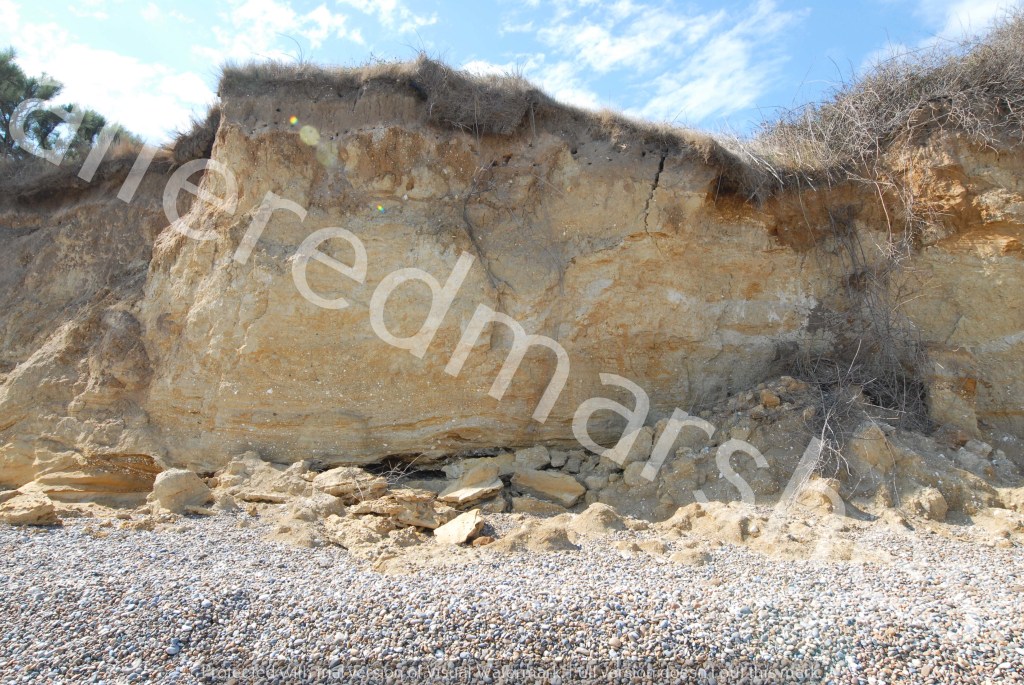
This assertion was put to the test, on Friday 10th of March, when a low-pressure system stacked against the Suffolk and Norfolk Coastlines in the Southern North Sea, generated a storm surge that severely damaged a coastal resort called Hemsby near Great Yarmouth. A surge measure of nearly a metre in size was estimated at Lowestoft, down the coast and predicted tide heights at Hemsby were 2.9 metres and 3.4 metres.

But to consider the significance of the storm surge on 10th March, it is useful to consider the likely presence of storm conditions around the time of the surge. Firstly, a low-pressure system, initially with tightly packed iso bars over Ireland, with low pressure values of 996-992 at 00:00 hours on Friday March 10th, was forecast to be situated over the North Sea and the Netherlands by 12:00 pm on Friday 10th March. Pressure systems can influence sea levels, with High Pressure causing a decrease in sea level and Low Pressure causing an increase. . It is said, a 1mb decrease in Low pressure can cause an increase in sea level of around 1cm. 

Low-Pressure System located over Ireland at 00:00 hours on Friday 10th March, source Met Office.
Low-Pressure System located over The Netherlands and the North Sea at 12:00 pm on Friday 10th March, source Met Office.

Elevated, agitated sea levels can be sustained for extended period, due the effects of strong wind speeds transmitting energy to the sea surface making it taut and choppy. The larger the expanse of ocean subject to the wind, the higher the waves, their power amplified by the fetch – the expanse of the area of the ocean exposed to the wind. Wind speeds originating from the Northeast were recorded to be around 50 mph and Significant Wave Heights at Lowestoft were recorded as reaching 3:4 metres at times on 10th March.

Wave action on 24th February had already caused a large Scarp to be formed on the beach, this feature is defined as a steep slope formed by erosion, with the verb describing a process to wear or cut to form a steep slope. The Scarp is estimated to represent a 10 ft drop in beach material.

Scarp caused by wave action at Hemsby Beach. Photo taken by Hemsby Beach Cafe at night on Friday 10th March.

Conditions on the beach at Hemsby on the 10th of March were observed by Hemsby Independent Lifeboat crew and Hemsby Beach Café. They described the sea seeming to sound evil in the early hours of 10th March. Significant damage at Hemsby includes metres of cliff loss, which has resulted in residents undergoing the traumatic experience of seeing their home demolished. One resident reported around 17 ft of cliff material lost (just over 5 metres) in the space of a week. Videos of the storm surge on Friday taken by Hemsby Beach Café show waves seeming to eat away at the cliff frontage at Hemsby.

The erosive power of wave action is described quite well in the Observer Book of Sea and Shore. As well as the force of energy within a wave, pebbles can be propelled with force against the cliff surfaces, in addition to the corrosive action of sand against the cliff frontage.

Storm surges continue to bare their teeth, tearing chunks from the coastline of East Anglia, As data, forecasting and ferocious surges conditions on the ground further analysis of the surges reshaping and perhaps forever altering the coastline and perceptions of the North Sea.

Big vs Small erosion events – the conclusion

Red House on the edge of the cliff above Thorpeness Beach, 2nd October 2022

As Red House in Thorpeness on North End Avenue is been demolished, because of coastal erosion, this discussion will conclude the series to discuss whether large-scale events or small gradual processes contribute the most to erosion.

The previous discussion about Thorpeness, the penultimate in the series, looked at the acute erosion on the beach in the photo above, below North End Avenue. This is a high energy, rapidly changing location. Features of this erosion include the soft composition of the cliffs and the constant shifting shingle and narrowing of the beach width, exposing the base of the cliff at Mean High Water Spring. Additionally, waves arrive at the beach from a South-West or North-East direction, both can cause erosion, though NE waves are thought to contain the greatest potential to scour beaches and cliff. This discussion concluded high wave events cause the most erosion, as the change is so dramatic it is hard to see how beach and cliff can recover. Each simply become playthings for the waves of the North Sea.

However, between August 27th and 22nd of September 2022, and more recently, with the demolition of Red House, the beach has changed considerably. Large amounts of material have been stripped from the cliff frontage with big chunks of material slumped from the cliff. High steep ridges of shingle at the back of the beach, are indicative of even less space between sea and cliff.

Thorpeness Beach, 2nd October 2022

In terms of the sea state in this time period, two wave events on the 31st of August and 16th September, saw a Maximum Wave Height (MHW) at Lowestoft exceed 3 metres, with Significant Wave Height (SWH) below 2 metres. There were several storm surges, with particularly high incidences on 13th, 16th, 15th of September.

Thorpeness Beach 1st October 2022

Overnight on 30th September 2022, MWH at Lowestoft reached 4.22 metres and SWH reached 2.62 metres. Additionally, a storm surge of .833 was recorded on this date at Lowestoft. However, the conclusion to the penultimate discussion in this series, was that high wave events, not surges cause the severe erosion at Thorpeness. But recent events would indicate this isn’t necessarily the case. As the high wave events mentioned above were lower than the 31st March/1st April event that previously caused serious damage.

Elsewhere on the Suffolk coast, this series has discussed desiccated cracking in clay flood embankments and how it can be exacerbated by drought conditions. As the top of the embankment, above the water line, is exposed to meteorological conditions, it can experience tensile stress. This can alter the structure of the soil and cause cracks to form which can extend up to 1 metre deep into the embankment. Should water under flood conditions seep into these fissures, it could cause the inward slump of embankment material leading to a potential breach. Therefore, the process of desiccated cracking could itself be an early manifestation of erosion, which could ultimately lead to the collapse of a flood defence.

The series has also looked at Sudbourne Beach on the open coast near Aldeburgh and Hazelwood Marshes on the Alde Ore Estuary. Both locations are subject to large erosion events but are also being gradually worn away by the actions of the waves. A definition of erosion was used that described it as process in which sediment is removed by weather driven wave action and transported away from the area being eroded to another location. This discussion considered the stages of damage to a shingle bank or an estuary path and asked at what point is the damage assessed to have occurred. The moment a structure is breached or destroyed, or when incremental altering begins that can weaken and damage structures over time.

In a recent visit to Hazelwood, the work of the Suffolk Wildlife Trust, who manage the site, can be seen to fill in eroded edges of the path, leading to the bird hide, and buttress them with branches from old salt-water scoured trees.

Hazelwood Marshes, Alde & Ore Estuary 2nd October 2022

Out on the inter-tidal area, it is evident the sea is eating away at the edges of the islands built up to enable Avocets to nest. It also wasn’t possible to examine the banks at the back of the reserve, as unusually, water from previous high tides prevented access. But scouring at the edges of the reserve can be monitored and repaired. What could be harder to quantify, is whether damage to the old sea walls enables greater quantities of sea water to access the reserve. Though as Hazelwood exhibits signs it can recover from erosion events, increasing frequent high tides could make continued maintenance of key features, harder to sustain.

Sea walls breached in 2013 and Islands raised for Avocets to nest, Hazelwood Marshes 2nd October 2022

Therefore, this series will conclude with a focus again on perceptions of damage. High Wave events, elevated tides and larger surges have elevated erosion processes, so that not only do they occur in a more dramatic ways, but they are now further developed. So perhaps it is a question of whether the actual act of erosion, removing and transporting of sediment. Or the ultimate conclusion to this process, inundation of a storm surge or destruction by wave action that causes the most damage.

“Playthings for the waves of the North Sea”

Shadowlands. Matthew Green

A piece of broken flood defence with notches in the cliff and gouging of cliff surface. Thorpeness 14/04/2022

The penultimate discussion in the series to consider whether large events or small gradual processes contribute the most to coastal erosion, will look at the beach and cliffs of Thorpeness. This area has been subject to gradual long-term erosion, but it is also a dynamic high-energy location where several metres of cliff can be lost in a single storm event. The following features cliff, beach, waves, sand banks, sediment, storms and erosion, will be explored, as they are part of the constant taking apart and altering that occurs at Thorpeness.

To begin with the cliffs, it is useful to consider the geographical make-up, to get a sense of structure. At the top can be seen, glacial deposits of sand, gravel and clays, thought to have been deposited by the Anglian Ice Sheet, around 450,00 years ago. Underneath is a layer of Norwich crag, comprised of marine deposits of fossil shells, bands of yellow and brown sands and clay. The penultimate layer is Red Crag, mostly courser sand and gravel, and this lies on harder Coraline Crag.

Eroded cliffs below Red House, Thorpeness 27/08/2022

The cliff composition gives a picture of how they could be manipulated by waves. Two papers’ Deriving mechanisms and thresholds for cliff retreat in soft-rock cliffs under changing climates: Rapidly retreating cliffs of the Suffolk coast, UK and the Shoreface Dynamics on the Suffolk Coast Marine Research Report find North Easterly winds produce higher waves with greater propensity to scour beaches. Damaging events can occur when NE waves record Significant Wave heights (SWH) that reach or exceed 3.11 metres, as waves of this height have the potential to move substantial amounts of beach material. For example, the event on 31st March 2022 where SWH exceeded 4 metres at Lowestoft caused considerable damage. Storm Surges can produce conditions capable of generating such waves, but they tend to cause damage in different places, in different ways.

Sediment transport is a significant feature at Thorpeness. The paper above to discuss cliff retreat, suggests low-level southerly waves, transport sediment in a northerly direction, possibly nourishing the Sizewell-Dunwich sandbanks. But NE waves scour sediment and transport it in a southerly direction. If we think of erosion as the removing of sediment and the depositing of this sediment at a separate location, then this is the constant process at Thorpeness. This could be why the width of the beach is so narrow, particularly where the most acute erosion occurs. At times the beach appears to be stripped of shingle, whilst at other times, shingle is piled up in ridges at the back of the beach. However, whatever the sediment situation, there appears to be hardly any distance between Mean High Water Spring (MHWS) and the base of the cliff.

View of Thorpeness Beach, with Rock Flood Defence, Shingle Ridges and Red House. 27/08/2022

Features of erosion include notches in the beach and base of the cliff and removal of substantial sections of cliff frontage. There is considerable slumping of debris from the top and the bottom of the cliff deposited on the beach, along with trees, turf and concrete slabs from gardens above.  

Each feature discussed above contains complex properties that interact and evolve on this coastline. High wave events could weaken cliffs and cause cliff retreat, in the years that follow storm events. But perhaps it is too simplistic to identify large erosion events as the cause of erosion. Fragile composition of the cliffs could mean they will inevitably erode over time. The beach constantly changes, when shingle accretes, this could mitigate erosion.

Notches in the beach and base of the cliff, Thorpeness. 27/08/2022

New notching into the beach, widening of notching at the cliff base and new desiccation cracks in August 2022, occurred during summer months when very few storm conditions were recorded.

Desiccation Cracks in Cliffs at Thorpeness. 27/08/2022

But it is the severity of the erosion during high wave events and the significant way they change the cliffs and beach, that suggest these events contribute most to coastal erosion. Particularly as they make mechanisms of recovery hard to envisage at Thorpeness. Complexity of the erosion and the characteristics and frequency of high wave events set the scene for the playthings of the North Sea.

Perceptions of Erosion

Erosion into shingle ridge, at top of concrete block flood defences, Sudbourne Beach, near Aldeburgh

This discussion is the second of a series, to debate whether big events, such as surges or high waves, or smaller gradual processes, cause the most erosion. This second conversation will look at erosion at Hazelwood Marshes in the Alde and Ore Estuary and Sudbourne Beach on the open coast. These areas have been selected because they provide examples of both small- and large-scale erosion. To frame this discussion, an initial definition of erosion will be used that describes it as a process that takes away physical substances, from the earth’s surface, mainly earth, sand or shingle and conveys this sediment by weather driven process’s such as wind or water from the focal point being eroded.

To begin with a consideration of Hazelwood marshes, it is necessary to acknowledge an immediate contradiction in the context of a discussion of whether erosion is caused by large- or small-scale events. As anyone who knows the history of Hazelwood, knows the reserve used to be a freshwater marsh, but was made intertidal on 5th/6th December 2013, when a large storm surge, caused the embankment flood defences to breach, leading to a permanent inundation of sea water into Hazelwood marshes. Therefore, it could be said that it is case closed, it is the large-scale flood events that cause severe erosion.

But in the case of Hazelwood, since the storm surge breach in 2013, it could also be said it is the gradual, small actions of waves, that could be significant. When you walk along the raised path to the bird hide at Hazelwood, when the tide is coming in, there is a noticeable change as the tide water which has been silently creeping in begins lapping at the side of the bank below the path. It is this constant movement, the tiny incremental expressions of energy, that could be said to be nibbling away at the banks on the reserve.

Erosion on the side of path facing the estuary, on the way to bird hide at Hazelwood Marshes

In the last few months, Suffolk Wildlife Trust who manage the reserve have removed a line of dead blackthorn trees and scrub scoured by intertidal salt poisoning. The materials were removed so they could be used to help support the structure of the path to the bird hide and infill some eroded sections. Erosion of the grass banks at the back of the reserve, below the holiday property, Marsh View is also visible.

Scouring into grass bank at back of reserve at Hazelwood Marshes

It is also noticeable how high the tide line appears to be, continuing the discussion of whether it is significant high water or the gradual actions of waves, that is causing the most erosion at Hazelwood.

High Tide line at the top of eroded grass bank, at back of reserve at Hazelwood Marshes

At the open coast at Sudbourne Beach, it is a more complicated picture. The coast is currently separated by a narrow shingle ridge from the Alde & Ore estuary. On the first section of shingle ridge from the Martello Tower towards Orfordness, various flood defences are deployed, such as concrete mattresses, concrete blocks, and large boulders. However, beyond a certain point, the flood defences stop, and the shingle continues without further defences.

The processes of erosion are two-fold. Above the various flood defences, there is significant scouring into the top of the shingle path, making it quite narrow to walk on. Proof, if it were needed, that the North Sea has never had much respect for flood defences.

Erosion at top of Concrete Blocks deployed as Flood Defences on Sudbourne Beach, near Aldeburgh

However, on the section of shingle not protected by flood defences, the shingle ridge has been pushed quite far back and there is evidence of a recent breach at the top of the ridge that separates the beach from the Alde & Ore estuary. It is likely this breach occurred during the high tides in January and February 2022.

Breach in Shingle Ridge, separating open North Sea from Alde Ore Estuary, Sudbourne Beach

To consider the erosion at Hazelwood Marshes and Sudbourne Beach, it is useful to further develop the definition of erosion discussed above. Whilst it is clear that sediment is being removed from the specific areas discussed, it could be said there is also a process of altering, noticeable losses of solid structures.

Therefore, to conclude the second debate in this series, to consider whether erosion is caused by large scale or small processes, the conversation could simply be a discussion about stages of damage. The incremental continuous damage to coastal features or the sudden forceful visibly recognisable events that create a hole or a channel through a seemingly firm feature. Assessment of this damage, as a one-off specific occurrence, or the culmination of damaging processes, could frame an evaluation of the significance of erosion in vulnerable coastal areas.

Flood Embankments – cracking in the heat?

In the lead-up to the two-year anniversary of alteredmarshes, a series of discussions will consider whether it is the big storm surge events that cause the most coastal erosion, or smaller processes that develop over a long period, that weaken flood defences and erode shingle and cliffs.

The first of these discussions will consider The Compact Oxford English Dictionary, definition of a crack, which states that a crack is a narrow opening between two parts of something which has split or been broken. The relevance of this description will be considered in relation to the effects of drought conditions on clay flood embankments. The Met Office recently reported England experienced its driest July since 1935, with the driest on record for East Anglia. Met Office maps for actual rainfall show figures in the range of 0 to 25 mm for the Suffolk area in July 2022.

The collapse of a peat levee during a drought in 2003 in the Netherlands, prompted increased research into the effects of drought conditions on peat levees and earthen clay flood defences, such as we have in the UK. A paper Managing drought effects on levees in The Netherlands and England, focuses on a process known as Desiccated Cracking. Clay flood embankments have what is known as a Phreatic Line – a line that separates the section of embankment under water and the area above the water line. When water in a river or lake evaporates, causing the Phreatic Line to drop, areas of earthen embankments exposed above this line, can become subject to metrological conditions.

The effect of drought conditions on earthen embankments is further developed in a paper Experimental and theoretical analysis of cracking in drying soils. A process called Tensile stress can alter the structures of soils on top of earthen embankments. Tensile stress refers to the highest level of pressure soil can bear before it fails. Tensile refers to pressures that are trying to pull the soil to extreme lengths. Therefore, the point when tension within a material exceeds the ability of the substance to resist the pressure.

Once cracks form in the top section of a clay flood embankment, they can extend into the embankment and reach lengths of at least 1 metre deep. If these fissures form a web, this can convert the clay layer into a rubble like material which increases the permeability of the surface of the earthen embankment. Should a flood occur shortly after a drought, water is able to flow through the fissures which can cause the inward collapse of the inner slope by continual upheaval of chunks of rubble-like material.

Grass revetments over the top of clay embankments can also suffer under drought conditions, with substantial retreating of grass coverage, especially if overgrazing by sheep or mowing of grass occurs around the time of drought conditions. However, should rain return, but not under flood conditions, cracks in embankments and grass coverage can recover, but this is not always the case.

However, there are very few examples of earthen embankments collapsing due to drought conditions. Which brings the consideration back to the debate of whether erosion is caused by large scale events or the effect of smaller long-term processes that can cause a flood defence to fail. In some ways, it is a question, of whether the processes caused by drought conditions, cause more damage than the high-energy, high-volume events in storm surge conditions.

In the case of Desiccated Cracking under drought conditions, the process can change the solidity of a soil mass. A process strongly influenced by moisture content in the material, which is why it is particularly applicable to drought conditions.

This is similarly the case with mud flats and open shorelines which could have negative impacts on coastal nature reserves. As estuary levels evaporate, the progression of tensile stress through a soil mass can lead to fissures in established pressure areas. In this context, [Lee et al., 1988], usefully apply the word brittle to describe the soil state. However, in the case of a flat expanse of mud, the ground could also be hard and compacted, with deep running cracks, that make it hard for water to be absorbed, especially in large volumes following a drought.

In conclusion, it is said that water finds its own level and it is the flood events that erode networks of cracks in embankments. However, it could also be the case that the process of desiccated cracking, is itself an early manifestation of erosion that reaches an advanced state and is ultimately concluded by flood events when they happen.