Winter Storms

Cliff frontage that looks like it has been sculpted by wave action with erosion notches visible, with sign warning of cliff falls. Pakefield 17th February 2024

This discussion will take an initial look at the extremely active winter storm season of 2023/2024. An enduring presence during the storms, Total Water Level (TWL) will be considered, alongside erosion common to both Sand and Shingle beaches in East Anglia.

Given the complex nature of the winter storms it might be simplistic to just identify one element, Total Water Level (TWL), when additional destabilising elements such as Wind Speed and atmospheric pressure also play a major role. But TWL can also play a major part, in agitated, elevated sea levels, extreme rainfall and extensive flooding of land and properties.

Winter Storms season of 2023 2024, begin with Storm Babet, the second named storm of 2023 on Friday 13th October, it continued through Monday 16th October until Friday 20th October. Storm Ciaran followed 9 days later on Sunday 29th and continued until November 4th. A considerable storm surge of over 1 metre occurred on Friday 24th November with a larger storm surge of just under 2 metres on Thursday 21st and Friday 22nd December 2023.

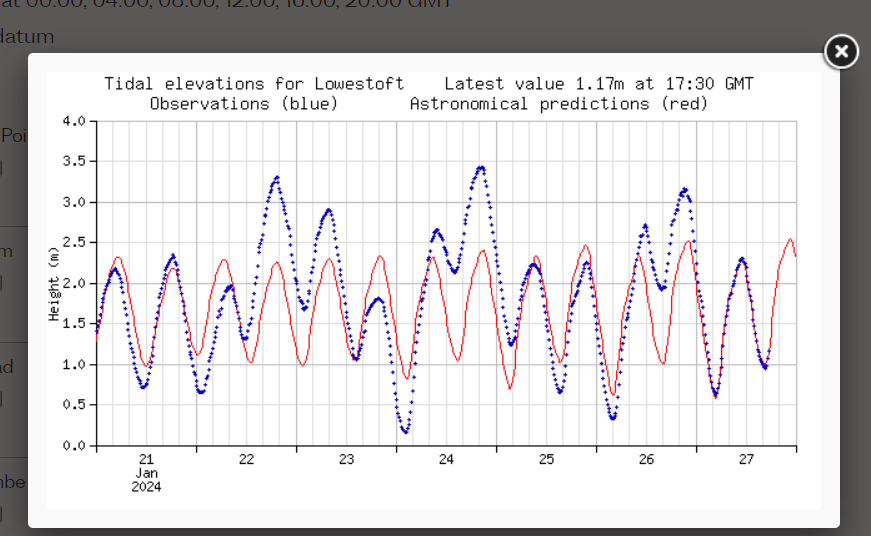
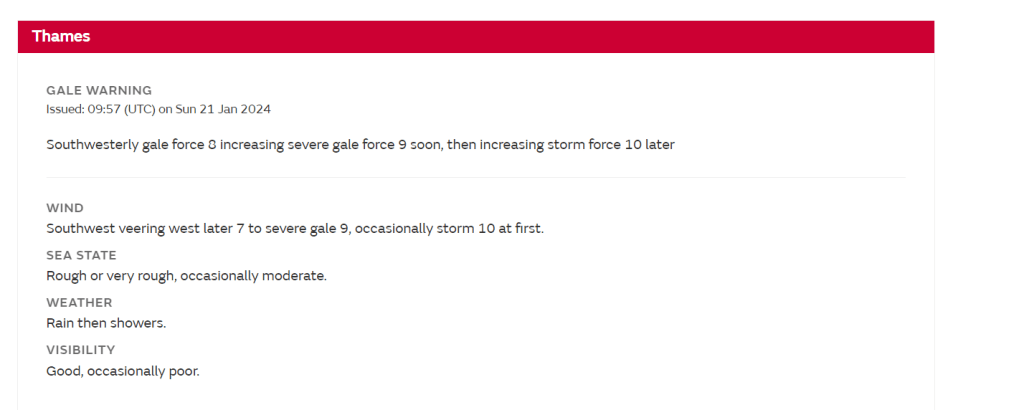
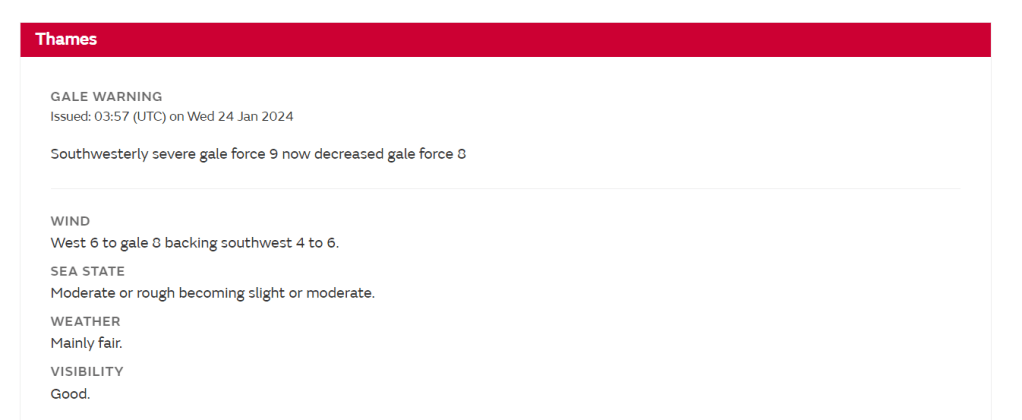
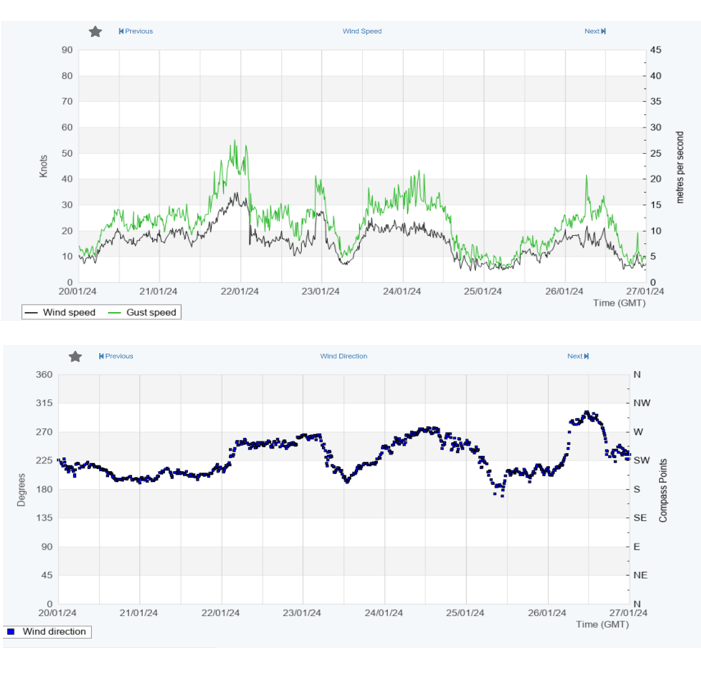
In 2024 on January 14th/15th, a Storm Surge measuring just under 1 metre hit the East Anglian coast. On 22nd January, Storm Isha and then Storm Jocelyn occurred in quick succession with 3 storm surges occurring in a week, the largest on Wednesday 24th January, measuring over 1 metre. On 30th January/February 1st, Storm Ingunn hit Norway, generating a Surge of over 1 metre. On Sunday 25th and Monday 26th February a storm, localised mainly in the Southern North Sea saw a 0.5 metre surge recorded for Lowestoft, with a surge of nearly a metre measured at Sheerness.  Finally, on the evening of February 29th/March 1st stormy conditions generated a surge of around 1 metre at Lowestoft.

Additionally, particularly High Spring Tides in March 2024, coupled with exceptionally high rainfall and strong winds, caused considerable erosion and flooding in places.

The list of storms above is a summary of a very intense period of activity. Therefore, this discussion will assess whether the TWL approach, can enable an assessment of the impact of storms on erosion of cliffs, dunes and beaches.

It is thought that in storms where TWL exceeds 3.9 m water levels can reach the dune or cliff toe, potentially causing hollowing of frontages and lowering of beach surfaces. Methods to assess TWL often use measures of Significant Wave Heights (SWH) that reach or exceed Storm Alert Thresholds. As it is thought that such thresholds, can initiate movement of beach material. The table below lists the SWH for Happisburgh, Lowestoft and Felixstowe for winter storm season 2023/2024.

Data sourced from https://coastalmonitoring.org/ The National Network of Regional Coastal Monitoring Programmes of England.

SWH heights hint at TWL at points on the coast where measures are taken, but they also give a picture of the variability of agitated sea states and how local they can be at times. For example, for November 24th, SWH of 3.6 metres is recorded for Happisburgh, above Storm Alert Threshold (STA), conditions that might contribute to the collapse of the road at nearby Hemsby. But SWH at Lowestoft remained below STA, close to where the road also collapsed at Pakefield.

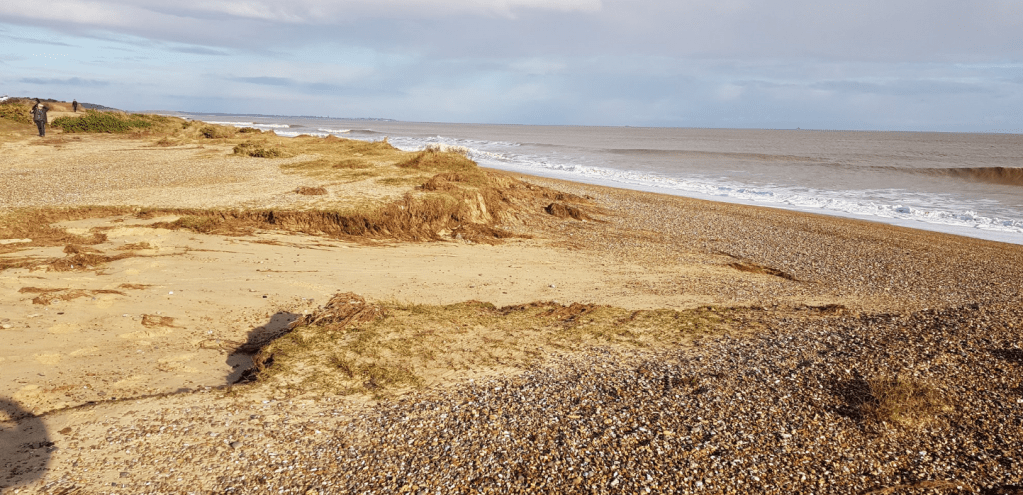
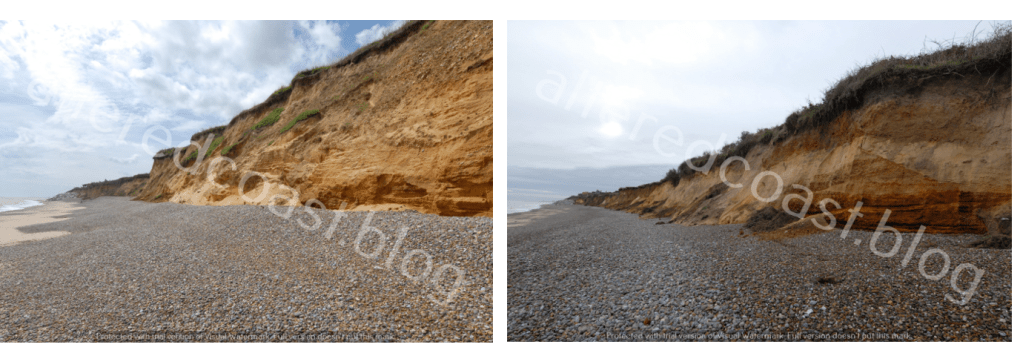
However, it is interesting to consider how common erosion features appear on beaches, despite the sections of coast being comprised of different layers of sediment. Photos taken on 20th January at Thorpeness and on 16th February at Pakefield, could be said to show wave height reached when dune face scouring occurred and could suggest the TWL present on the beach.

Photos taken at Thorpeness (L) on 20th January 2024 and (R) Pakefield on 17th February 2024.

The potential energy in the TWL present on beaches is suggested in the photo below, taken at Minsmere that shows old wartime sea defences that have been uncovered on a beach stripped of shingle, with signs of a Scarp or cliff appearing to form in the remaining Shingle on the Upper Beach.

Old Wartime Defences uncovered on the beach at Minsmere, that has been stripped of shingle. Photo taken on 25th January 2024, courtesy of Steve Everett.

Cliff-like Scarps on Shingle beaches are said to only be maintained if physical conditions, enable sand to infill spaces in between the Shingle, to sustain the steep feature. Waves can cut into the bottom of Scarps, which can also influence subsequent wave direction. Increasing transportation of sediment off-shore.

Another significant type of erosion that has occurred at several coastal locations in East Anglia is Cliff failure, due to rainfall. Instances of this erosion have been observed at Dunwich and Pakefield in Suffolk and Overstrand and Sidestrand in Norfolk. It has been found that in stormy weather it is the combination of TWL reaching the Cliff toe and high rainfall that can cause cliff collapse, but it is thought that heavy rainfall is the predominant cause of cliff collapse in East Anglia and other coastlines around Britain. Particularly as at Dunwich, it was said that foredune on the beach had accreted sediment, so waves were not hitting the toe of the cliff.

The two charts below from the Met Office show rainfall levels for January and February 2024.

Photos sourced from https://www.metoffice.gov.uk/

In January there were around 75-125 mm of rainfall and in February East Anglia had its wettest February on record, with 106.4 mm of rainfall.

Rainfall can cause severe damage to cliff structures in the following ways. Referred to as a Terrestrial process, rainfall can affect elements that determine the volatility of cliff materials. On the beaches of Thorpeness and Pakefield, with cliffs partly comprised of Glacial Till and sands, two views on the impact of rainfall on these surfaces are suggested.  

Photo of cliff erosion and rainfall runoff at Pakefield. Photo courtesy of Bev Hudson.

For Moderately cemented sands in cliffs that resist wave attack collapse can occur due to the penetration of rainfall soaking through materials. This process is aided by Desiccated Cracking causing sections of material to develop an imbalance that can lead to failure.

Signs of wave erosion with possible remains of a broken road as a sharp outline at the cliff top. Possible run-off of rainwater down the cliff frontage also visible Photo taken between Pakefield and Kessingland, courtesy of Bev Hudson on 10th March 2024.

For Weakly cemented sands, wave action succeeds at eroding the cliff base with erosion and instability progressing up though the dune structure. As material falls from the cliff surface due to wave action, volatility develops in the upper cliff and these combined weaknesses cause collapse.

At a British Geological site at Overstrand in Norfolk a 300m section of cliff was studied located roughly halfway between Overstrand and Trimlingham. In this location, rainfall is thought to be main driver in cliff retreat, due to the abundant presence of clay in cliff materials. In this context, rainfall is thought to have the following impact on cliffs in this area.

There is thought to be a greater likelihood of the formation of pathways across cliff sections without vegetation, with subsequent movement of sediment through the gullies. This could enhance the formation of mudslides which can transport sediment down the cliff frontage. The level of the water table within the cliff can also be elevated, causing water to percolate through the frontage. Water resistant layers of cliff material can also funnel groundwater through the cliff. Breakdown of lumps of sediment across these resistant layers is thought to be caused by the materials progression across the plane of these channels.

Regarding these failure processes, in addition to heavy intense rain fall, it is also thought the cumulative impact of moderate rainfall can build up weaknesses. Such frailties can cause landslides days or months after initial rainfall episode. This makes it very important that members of the public do not walk close to the edge of cliffs and dunes as coastlines may have not recovered from the effects of heavy rainfall. A sign on the Dunwich coast warns walkers that path is still closed following cliff collapse weeks earlier.

A sign on a footpath above cliffs that collapsed due to heavy rainfall in early January. Photo courtesy of Matt Salusbury/Dunwich Museum.

In this discussion, consideration has been given to the severe storms that have hit the East Anglian coast in Winter 2023/2024. With a consideration of whether the concept of Total Water Level (TWL) can act as a contributory factor to types of erosion that occurred. TWL can be measured in Significant Wave Height, which can potentially increase likelihood of wave contact with the dune or cliff face. With some erosion features displaying the level of wave height that hit the cliff. TWL is also present as a feature in cliff failure due to rainfall.

However, in considering the usefulness of TWL in assessing the effects of winter storms, TWL can suggest volumes of water likely to have been in contact with dune and cliff faces. But it could be said there needs to be an additional element present, to move, agitate and initiate water volumes. Therefore, it might be better to consider TWL as one factor amoungst several destabilising tensions within complex storm systems that can erode and weaken fragile coastlines.

Damage of The Surge

Damage caused to dune that used to separate Car Park from the beach. Hemsby 15th January 2024. Photo courtesy of Lee Jones.

A Storm Surge measuring just under 1 metre hit the East Anglian coast on the evening of 14th/15th January 2024 with the surge persisting for around 24 hours.

The Surge, which coincided with Spring Tides resulted in extremely High-Water levels causing flooding in places, with the Thames Barrier closing for the 211th time, since its inception. High Waves also caused severe damage at Hemsby and other locations. Therefore, this discussion will continue the 2nd part of a two-part look at whether Surges have a particular strength to cause serious damage. In this context, Damage is defined both as physical destruction as well as overtopping of structures and/or flooding.

The 1st part of this discussion looked at the damage caused by two surges in November and December 2023. The two surges had slightly different characteristics, the first on Friday 24th November was the lower of the two surges with high wind speeds and wave heights. It seems that this surge was also slow-moving with a longer duration and fetch, which is the surface area over which the wind blows over the ocean. The second Surge on 21st & 22nd of December was produced from much steeper pressure gradients with a deeper low-pressure system, but wave and wind heights were lower with a much shorter spike in the level and persistence of the surge.

It is generally accepted that determinants as to the magnitude of a surge include wind strength, direction, and distance over which the wind is blowing, the “fetch”. In addition to how these forces combine with atmospheric pressure, the track of a low-pressure system and how these influence the elevation and the velocity of the sea. But the level of a storm surge does not necessarily give an indication of the power of a surge. Surges are rarely similar, as they are produced from differing weather systems, and display different features. But is it the case that whatever their traits, Surges possess a particular strength to cause severe damage to coastal landscapes.

It is said the North Sea is particularly vulnerable to Storm Surges. One reason for this is the effect of Coriolis forces, which describe the way the earth rotates, which influence the acceleration of ocean currents. In the Northern Hemisphere this means movements of sea water are accelerated to the right. If a storm moves down the North Sea, elevated sea levels will be piled up against the coastline. This point is also relevant because the North Sea is rather shallow.

Therefore, it is thought that as two flowing elements connect with each other a transaction occurs between the quicker moving element and the slower element. If this process is translated to wind blowing over the ocean, a wind speed of 23 metres per second blowing over 200m of water, with a depth of 30 km, could cause a rise in sea level of 0.85m. If the gale force increases to 23 metres per second, sea level could increase to 1.60 m.

Shingle Ridge Sudbourne Beach. Suffolk 26th November 2023

The effects of Wind tension on the surface of the sea, produces differences in the speed of the current in relation to the depth of the water. It is thought that water is propelled at around 3% of the wind speed applied to the ocean’s surface. As an ocean current runs down a coastline, it rises progressively in a manner that operates inversely with the depth of water. Movement of the current and alterations in ocean levels can be magnified if the tension of the wind on the surface moves water in the direction the wind is blowing.

But do these surge characteristics provide evidence regarding the particular destructive power of surges. Especially as Wind Wave storms with Significant Wave Height persistently above Storm Alert Thresholds also occur in the North Sea. Such storms can also cause severe erosion features and harm to coastlines.

Additionally, it is said, sea water elevated by storms can simply mean tidal water is kept longer on beaches between tides. Specific forceful sea water episodes produced by storms that coincide with a tide, could simply be the product of a collection of storms, A series of storms can generate wave power equal to a single extreme weather event. Is it possible within these tempestuous sea states, to pick out a surge, as the sole culprit, of a culmination of damaging coastal events.

It is valid to query the usefulness of isolating one type of agitated, sea state that predominantly presents itself simply as the high wave heights or water levels that cause the damage. It could be more useful to coastal communities and urban centres affected to warn of higher than usual tide levels, with faster wind speeds and waves than normal. However, it isn’t the case that such a sea state will remain as a volatile phenomenon to be viewed from a distance.

With the surges in late 2023 and in the last few days, it is the large scale, almost clean sweep, for want of another description, of the destruction, that marks these surges as significant. At the time of the largest surge on 14th/15th January 2024, wind speeds at Happisburgh were under 30 metres a second. At Felixstowe, measures were just above 20 metres per second around about the time of the highest surge on Monday 15th January. Yet a Flood Warning was in place for Sunday 14th /Monday 15th January for flooding at Bawsdsey Quay and Felixstowe Ferry. With sea levels at mAODN (height above average sea level) of 2.92, which is 0.88m above tides tables.

Therefore, to conclude this debate, even though every storm surge can be different, generated, as they are, by numerous systems acting on the ocean’s surface. Each surge is a demonstration of the transfer of momentum between atmospheric systems and the sea. Alterations in pressure systems alter energies down though the surface of the sea which are felt at all levels. With wind tension applied to both the physical surface and as well as equidistant to it.

Thorpeness Beach. 26th November 2024.

The deepening of low-pressure, the strength of the wind and size of the area over which it blows, and the duration can initiate systems outside of normal tidal processes. These mechanisms can elevate and give Surges a particular force. When this is ranged against coastlines and tidal estuaries it can generate abnormally high-water levels. It is the intensity of these energy processes that can cause severe disruption to coastal landscapes and infrastructure.

Surge

Few areas are more susceptible to large dangerous storm surges than the southern part of the North Sea.

Storm surges, 1967–1982. N. S. Heaps. Geophysical Journal International, Volume 74, Issue 1, July 1983, Pages 331–376.

This discussion will begin a two-part consideration to look at storm surges. The first part will discuss the effects on the East Anglian coast of two surges that occurred on 24th November and December 21st/22nd 2023. The second part will debate the extent to which storm surges possess a particular strength with the ability to cause significant long-term damage on a coastline. This 2nd part will debate contributory factors to the potential power of surges, with reference to the slightly different meteorological conditions that produced the surges in November and December.

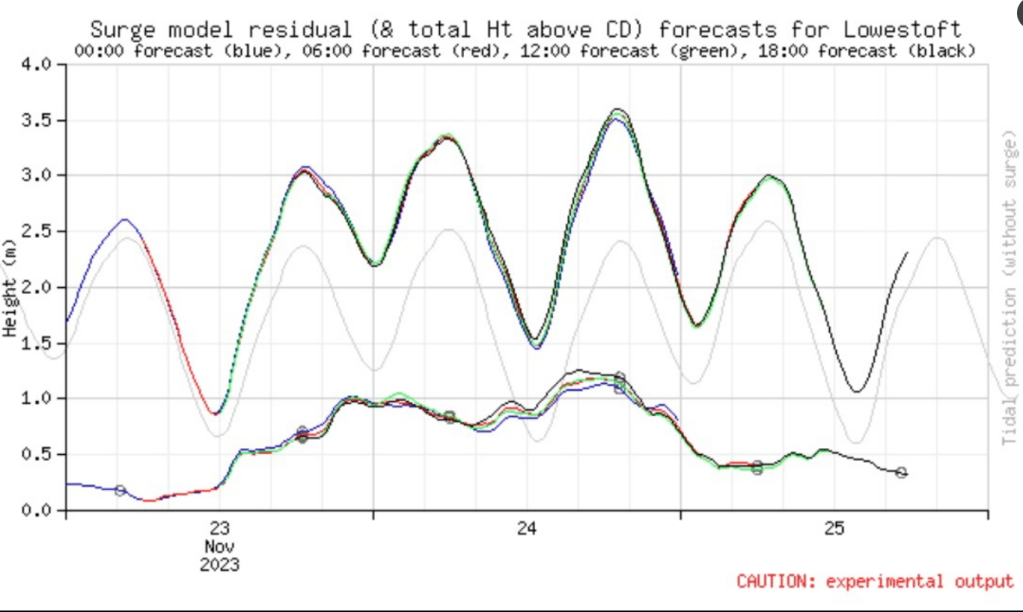
On Friday 24th November, a storm surge measuring over 1 metre was forecast for Lowestoft, with similar forecasts in place at Cromer and Felixstowe.

Data sourced from The National Tidal and Sea Level Facility
 (NTSLF) https://ntslf.org/storm-surges/surge-forecast

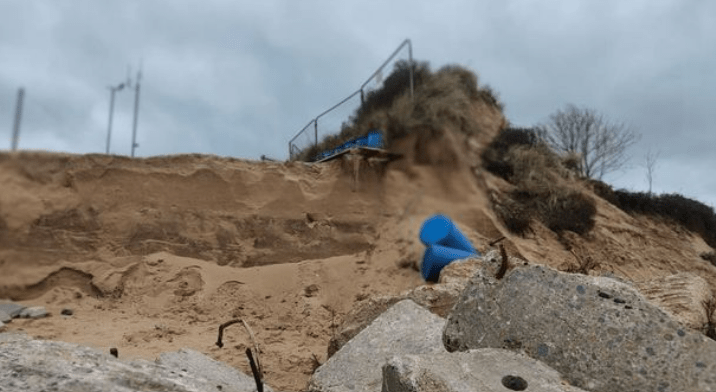
In the time period of the surge several significant erosion episodes were recorded. Particularly significant damage occurred at Hemsby in Norfolk and Pakefield in Suffolk, where large sections of access road used by residents at both locations, collapsed into the sea.

Image showing the section of Access Road that collapsed at Pakefield on Friday 24th November. Photo courtesy of HM Coastguard Lowestoft.

In other areas of Suffolk, At Minsmere RSPB nature reserve, the surge overtopped the dunes and temporarily washed into the nature reserve before draining out within 2 days. Sea water from the surge, flooded the beach fence line, with the sea seeming to break through sections of dunes in places.

Area of Dune where sea appears to have broken through a section of dune in front of RSPB Minsmere, following surge on Friday 24th November 2023. Photo courtesy of Steve Everett. RSPB.

At Thorpeness, the surge seemed to level the length of the cliff frontage, with a noticeable difference in beach profile from photos taken on November 5th and 26th November 2023.

Two photos taken at Thorpeness beach. Image on Left taken 5th November 2023 and image on the Right taken 26th November 2023

At Sudbourne beach, the shingle ridge appears to have further flattened out, with two wide fans of shingle that appear to stretch towards the water channel behind the wall that protects the Alde & Ore Estuary. In the estuary itself, the surge caused a greater volume of water than usual to flood the saltings for prolonged periods of time both before and after high tide.

Sudbourne Beach, near Aldeburgh, Suffolk. 26th November 2023

The second storm surge occurred as Storm Pia hit the UK. between midnight on Thursday 21st December and the early hours of Friday 22nd December 2023. A storm surge measuring around 1.7 metres was forecast for Lowestoft.

Data sourced from The National Tidal and Sea Level Facility
 (NTSLF) https://ntslf.org/storm-surges/surge-forecast

At Hemsby, damage from the surge included scouring of around 2 metres of sand from Hemsby Gap, and the formation of a 1-3 metres Scarp. Additionally, less than 2 metres of dune remains North of Hemsby Gap, with a car park and Hemsby Independent Lifeboat station, immediately behind this section of dune. The damage to the slipway has meant that Hemsby Independent Lifeboat has been out of service.

Photo showing 1-3 metre Scarp at Hemsby Gap. Image taken 24th December 2023, courtesy of Hemsby Beach Cafe

Another significant feature of the December storm surge was the tide locking effect that occurred on the Norfolk Broads. This meant water that would naturally drain out into the sea from the Broads was prevented from doing so because of the volume of water coming up the rivers from the storm surge in the North Sea.

Two images showing water levels at Beccles Quay on River Waveney on 22nd December and land potentially below sea level on the Norfolk Broads.

Two weather system maps for the storm surge on Friday 24th November and Thursday 21st December, provide a useful framework for the debate in part two of this discussion, as conditions show some similarities as well as significant differences.

On Friday 24th November, a low-pressure system was located off the East Anglian Coast, whilst a high-pressure system was located over the Atlantic. At Happisburgh low pressure dipped to 1016 mb between 10:50 and 15:20 on Friday 24th November. A Significant Wave Height of 3.6m was recorded at Happisburgh. 

Surface Pressure Forecast Map produced by the Met Office for midnight on Friday 24th November 2023. https://www.metoffice.gov.uk/weather/maps-and-charts/surface-pressure

On Thursday 21st December, again a low-pressure system was located off the East Anglian Coast, whilst high-pressure was located over the Atlantic. However, the pressure gradient was much steeper, with low-pressure deepening to 997 mb between 07:30 and 08:00 am on Thursday 21st December. SWH also remained below the Storm Alert Threshold on Thursday 21st and Friday 22nd December 2023.

Surface Pressure Forecast Map produced by the Met Office for 12:00 pm on Thursday 21st December 2023. https://www.metoffice.gov.uk/weather/maps-and-charts/surface-pressure

It would seem to be apparent that the two storm surges in November and December, were produced in slightly different weather conditions, but both surges had a significant effect on the coast and inland tidal estuaries. Therefore the 2nd part of this discussion will consider the potential specific strengths of a storm surge and debate this phenomenon with reference to meteorological conditions and likely sea state features that can make surges so damaging.

Winds & Waves of The Storm

Waves breaking at Hemsby Gap on the Norfolk coast, 17th September 2023.

Storm Ciaran hit the Southern half of England on the evening of Wednesday 1st November and further intensified to a severe storm on Thursday 2nd November.

One distinct feature of Storm Ciaran was that it seemed to be a Wind Wave Storm. A characteristic of a storm of this nature is the Significant Wave Height (SWH), the average height of a third of all waves. It is thought if SWH, reaches above a certain threshold, waves of this height have the potential to move significant amounts of beach material.

The SWH at Hemsby was forecast to be 2.4-3 metres, with wind speeds of 50/70 km/h, with a southerly/south-easterly direction. At Felixstowe SWH was forecast to be 2.4-3 m, with wind speeds of 65-75 km/h, with a southerly direction. At Lowestoft SWH was forecast to be 2.4-3 m, with wind speeds of 50-70 km/h, with a southerly direction. At Lowestoft the general, long-term SWH Storm Threshold measurement is 3.11 metres and at Felixstowe it is 1.94 metres.

The Met Office Surface Pressure Charts indicate the presence of weather conditions likely to produce disruptive sea states. The charts showed the Low-Pressure values for Storm Ciaran to be around 980 mb off the Southwest Coast at midnight on Thursday 2nd November, deepening to 972 mb at 12 pm on Thursday 2nd November. The Shipping Forecast produced by the Met Office gave the status as Low 100 miles west of FitzRoy 972 expected Humber 956 by midday tomorrow.

Low-Pressure systems have the potential to raise the sea level, potentially producing damaging storm surges, strongly influenced by the meteorological conditions at the time. A small surge was forecast for Lowestoft, with a surge of over 0.5 metres forecast at Cromer.

Another interesting feature of Storm Ciaran was that it was forecast to be a very slow-moving storm, likely to cause heavy periods of rain or strong winds to remain over Southern England, and the coasts of the South West, the English Channel and the North Sea for some time. Not to draw any parallels, but one of the features of the 1953 Storm was that it was extremely slow moving over the North Sea, which expanded the length of the wind area, increasing the surface capacity of the wind to produce damaging waves.

As in a storm of this magnitude, Wind, Waves, Rainfall and Sediment can dynamically interact to unleash intense damage on vulnerable, fragile coastlines.

In addition to concern about destruction, is the sudden sense of loss caused by erosion. The rapid destruction or diminution of landscapes, changed potentially forever by the wind & the waves.

The Ness at Thorpeness Beach. 5th July 2023

July Tide Data 2015-2023

This discussion will continue previous considerations looking at Tide data from Lowestoft for the months of January and July, from 2015 to the present day. The two months were selected to give a contrasting snapshot of tidal values in a winter and a summer month in the year. A chart is updated twice a year with data from the 1st, 15th and 30th of the month, to indicate the highest tide values for these dates in January and July, for each year being considered.

The highest Surge (or residual) value is also collected and displayed in a Table below. This relates to the tendency for an elevated bulge of water, generated by meteorological conditions and separate from the tide, to arrive a few hours either side of tidal high water.

To begin by looking at Tide data for July 2015-2023 for the dates 1st, 15th and 30th of the month. The chart below shows the Highest Tide Value for the dates mentioned.

This chart uses data from the National Tidal and Sea Level Facility, provided by the British Oceanographic Data Centre and funded by the Environment Agency. Data is obtained from Lowestoft, Port P024, Latitude: 52.47300, Longitude: 1.75083.

The chart shows fairly regular tide heights for the years and dates selected. With the most noticeable features being the slight dips in tide levels in 2016, 2020 and 2023, which seem to occur uniformly on the 15th of the month. However, it seems that there is nothing particularly significant about the 15th of the month, as the higher values for tide heights for 2018 and 2021, occurred on the 15th of July for both these years. It is noticeable that highest tide value occurred on 15 July 2021, in same year that saw exceptionally high tides for January 2021.

Additional data for surge values for 2023 on the dates mentioned above has been collected alongside tide heights for these dates, and this data includes the tide values above.

This Table uses data from the National Tidal and Sea Level Facility, provided by the British Oceanographic Data Centre and funded by the Environment Agency. Data is obtained from Lowestoft, Port P024, Latitude: 52.47300, Longitude: 1.75083.

Consideration of Tidal levels and surge are useful to provide a snapshot of noticeable trends over time. As the basic data collected can provide a backdrop to observations or events on the coast. Additionally, these considerations can help to identify any significant alterations in the patterns of the ever-changing, ever-restless North Sea.

Sandbanks, Tides, Erosion

Hemsby Beach, looking from Hemsby Gap towards Winterton Ness. Photo Courtesy of Hemsby Beach Cafe

This discussion continues to look at severe erosion at the coastal community of Hemsby in Norfolk. Previous discussions considered Scarps and the effects of Lowering and Steepening on a Beach profile when the Sea Comes In. This latest discussion will consider how the tides, sandbanks and beach interact in a mobile, fluid environment on a fragile coastline.

The coast as a living feature, will also be explored using a process called Transgression. A mechanism whereby a coastline to compensate for an increase in sea levels due to beach lowering and reduction in width, reclaims land space by eroding into sand dunes to attain a new breadth and elevation.

The mechanism of Transgression is described in a report prepared in 2018 for Great Yarmouth Council, entitled Hemsby Coastal Management Report. It discussed possible solutions to erosion at Hemsby, following severe storms after the Beast from The East in 2018. The map below gives a rough indication of the location of the Sand Banks in this discussion. Although the paper from which it was sourced was written in 2007.

Map showing Great Yarmouth Sandbank System, sourced from Morphodynamic behaviour of a nearshore sandbank system: The Great Yarmouth Sandbanks, U.K.
lJosé M. Horrillo-Caraballo; Dominic E. Reeve

Key assertions in the report suggest a relationship between a feature known as Winterton Ness, and the area south of Hemsby Gap. With particular focus on the Caister Shoal Sand Bank which follows the line of the coast from Winterton down to California. Although the exact nature of the relationship is unclear, the presence of a deep-water near shore channel that runs between the Caister Shoal Sand Bank and the shoreline suggests a tidal flow pathway.

Particularly regarding alterations, leading up to 2011, when a swift sizable build-up of sand was observed on the sea ward side of the near-shore sand bank. This accumulation shrunk the cross-sectional area of the sandbank, causing it to move closer towards shoreline, reducing the width of near shore channel. The land facing side of Sand Bank is also the sea-facing side of the shoreline at Hemsby. Restriction in the width of near shore channel, led to cutting into the landward side of the Sand Bank, which focused higher tidal flows of deeper water further towards the shoreline.

This process restricted the area available for beach recovery, as increased erosion, caused beach retreat. To reclaim this restriction in space, the sea eroded into the dune system, to regain space to enable a more natural beach to develop at a higher level.

An abnormal tidal environment is also said to exist between Winterton to Caister. Normal Flood Tide flows North to South, and Ebb South to North. This creates a sizeable difference in tidal elevation and current speeds in both directions, forming a ‘Head’ of water between Winterton and Caister.

Map from the Hemsby Coastal Management report showing the Normal Flood and Ebb Tides in the North Sea and the flows round the Great Yarmouth Sand Banks.

Regarding the tidal regime between Winterton and Caister, average tidal current velocities are thought to reach a maximum around 4 hours before High Tide at 1.75 m/s on Spring Tides and 0.98 m/s on Neap Tides. Regarding the Ebb Flow, average velocities reach a maximum 2 hours after High Tide, 1.45 m/s on Spring Tides, 0.82 m/s on Neap Tides.

Residents from Hemsby have observed that a Sandbank can be seen 50 yards out from the shore, this pinches the flow of tide which accelerates to this point. A recent video taken by Hemsby Beach Café, could indicate the location of a near shore channel on Hemsby Beach.

It has also been observed that it doesn’t take much to cause damage, an easterly wind, a reasonably high tide along with low pressure lifting up the sea. Recently on 11th June 2023, a notice from Great Yarmouth Council warned of metal and concrete debris exposed on Hemsby Beach, in front of the Gap area, currently protected by large boulder blocks. This followed High Tide which covered the beach area at Hemsby Gap. In addition, only one line of dunes remains on The Marrams, with around 300 metres of sand estimated to have been lost since 2013.

One interesting point concerns the extent of erosion over time and whether a marked increase occurred prior to 2011. The time a noticeable accumulation of sand was observed on the seaward side of the Sand Bank. Residents assert that due to extreme winds early in the 1990’s, 12 foot of sand was stripped from the beach, and it hasn’t recovered since. It would be interesting to consider why sand lost in the 1990’s was not restored and retained on Hemsby beach.

Hemsby residents often say that they didn’t think a storm would be as bad as it turned out to be. This discussion considered living features on the coast, which could exacerbate the damaging effects of a storm. Regarding solutions, the report favours installation of a Rock Berm, planning permission has been granted, but funding is still to be sought. Nevertheless, a solution would seem to be needed. To enable both the living coast and the community with its life on the Marrams to coexist in this dynamic, living, breathing sea scape location.

Skew Surge

This discussion will combine analysis of annual January tide data from 2015 to the current year, with further consideration of the 1953 storm event, to consider the usefulness of a Skew Surge. The total difference between Maximum Predicted Astronomical Tide and Maximum Observed High Water.

To begin with a look at annual observed Tidal High Water (HW) data for Lowestoft, from January 2015 to the present, each year the chart is updated to show annual tide data for the dates of 1st, 15th and 30th of January. The data for 2023 can be seen towards the end, on the right-hand side of the chart. For the 1st January, maximum observed tidal HW was 2.665 metres, for 15th January, it was 2.918 metres and for 30th January, the value was 3.019 metres.

The data is obtained from the National Tidal and Sea Level Facility, provided by the British Oceanographic Data Centre and funded by the Environment Agency.

To consider the skew surge, for the dates in January 2023, the table below shows the values for Maximum Predicted Astronomical Tide and Maximum Observed HW, and the Skew Surge for these dates. The figure for the skew surge is obtained by calculating the difference between the Maximum Predicted Astronomical tide and Maximum Observed HW.

The data obtained from the National Tidal and Sea Level Facility, provided by the British Oceanographic Data Centre and funded by the Environment Agency, and the National Oceanography Centre.

It is interesting to note how values for 1st January and 30th January, occur quite close to predicted tidal HW, though a skew surge value applies whatever time it occurs within the tidal cycle. This useful to note, as recent flood warnings at the end of February highlighted that a storm surge can occur either side of predicted high tide. A diagram from a paper to discuss tide and surge independence illustrates the position of a skew surge, in a tidal cycle.

A skew surge can occur on any tide, and occurs independently, as the value only shows the difference between predicted and observed HW. So a Skew Surge could be framed as analysis of what constitutes the elevated portion of HW, the factors that create this elevation, and its significance in storm analysis.

To consider this, the Skew Surge on 15th January 2023 can be used as an example. Maximum Predicted Tidal HW of 2.37 metres, occurred at 02:12 am, and Maximum Observed HW at 15:45 pm. Low pressure dominated, ranging from 995 to 1993 mbar, winds blew from a Southwest to Northeast direction, wind speeds increased from 18-20mph at the start of the day to 24 mph around 09:20-11:20 am.

Weather conditions can help explain a rise in observed sea level. Especially because on the January 2023 dates, all three tides were Neap Tides, when tides are smaller than usual. Regarding the 1953 storm, the scholar Steers in 1953 wrote that surge conditions in 1953 could have been even more serious had the surge occurred on a high Spring Tide. Steers states predicted Spring Tides were around 1-3 ft less than occur at other times of the year. This suggests the main cause of damaging sea levels in 1953 were meteorological conditions on the night. The Skew Surge on 31st January 1953 was 2.41 meters at Lowestoft, whereas in 2013, the skew surge was 1.98 metres, even though the astronomical Spring Tide was higher in 2013.

A Skew Surge can contribute to analysis of a storm by indicating likely presence of specific, local conditions capable of generating dangerous surge conditions. But further information is still needed to ascertain its significance. Predicted tide height, levels of low pressure the breadth and duration of a surge, whether high water was still or agitated, wind speed and direction, all important indicators of the severity of a storm.

Values for Observed Tidal HW, in the January chart and the Skew surge for the January dates, show elevated sea levels and indicate the particular nature of a surge. These characteristics can contribute to an understanding of troubled sea levels and the power of the infamous surges of the North Sea.

Power of the Sea

Anyone who has been among mountains knows their indifference, has felt a brief, blazing sense of the world’s disinterest in us. In small measures, this feeling exhilarates. In full form, it annihilates.” –

Quote from film Mountain.

Waves breaking on beach at Orfordness. 7th August 2021

The sea inspires fascination, its otherness captivates and evokes awe and a sense of calm. But it is also a wild, phenomenon governed by natural influences, independent of people and homes and daily life. Storms like the 1953 surge, are a concern, because they remove the distance between humans and the weather. Normally, the weather happens around us, but it doesn’t directly impede daily life, or place people, and homes in peril. Storms operate as a natural force, acting according to rules, which may align with the laws of physics and meteorology, but operate with a force and ferocity, incomprehensible to humans and completely indifferent to their presence.  

Analysis by Wadey, Haigh, & Nicholls et al. identify particular characteristics that made the 1953 storm so destructive. The Low-Pressure epicentre, (known as Low Z) (Pollard, 1977), which at one point, dropped to 964 mb, produced extremely strong northerly winds over the North Sea. The storm’s trajectory from Ireland to Europe, featured an abnormally slow journey to the coast of the Netherlands. This created a lengthy north-south wind system over the North Sea, widening the area in which the wind could generate waves. This strengthened storm surge formation, and gradual amplification of northerly winds severely enhanced wave heights causing the sea state to deteriorate further. These conditions hit East Anglia severely because the rotation of the earth, deflects water to the right of tidal currents. As tide and surge travel in a southerly direction, the height of both, and shallower bathymetry (depth) in the southern North Sea, push large volumes of water towards its coastlines.

Waves breaking onto a beach at Slaughden, Aldeburgh, Suffolk 21st April 2024

Ferocious conditions on the night of the 1953 storm, set the scene for the assertion in the book North Sea Surge, by Michael Pollard, in which he writes:

“It is not journalistic fancy to write that the North Sea went mad on the night of 31st January 1953”

It is also claimed the insane rage of the North Sea had a return period of around 1-3000 years in some places. With a storm of such a size, and intensity, how can humans be expected to develop comprehensive, resistance, with warnings and defences to manage such a force of nature. Especially as Michael Pollard also writes that for several hundred years, at least, it has been very difficult to know without consulting maps and records, and sometimes, even then it is not clear where sea and land begin and end according to early archives. History has always told of a constant battle between land and sea.

It is perhaps, then not useful to draw inferences with today and the preparedness of coastal areas for future storms, by considering insights from Pollards book. In which he writes that tides can be predicted years ahead with some accuracy, but surges, tend to disrupt this accuracy. Reports describe how the inner landward facing walls of embankments failed, enabling the sea to overcome communities from the rear, sometimes many hours after sea facing defences many miles away had withheld the sea.

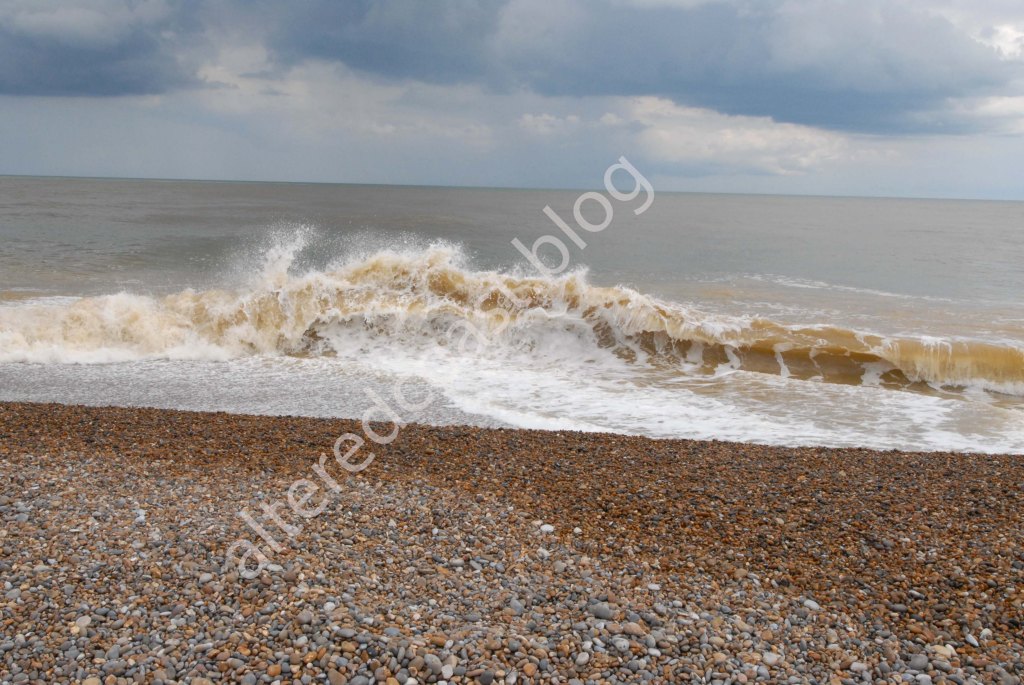
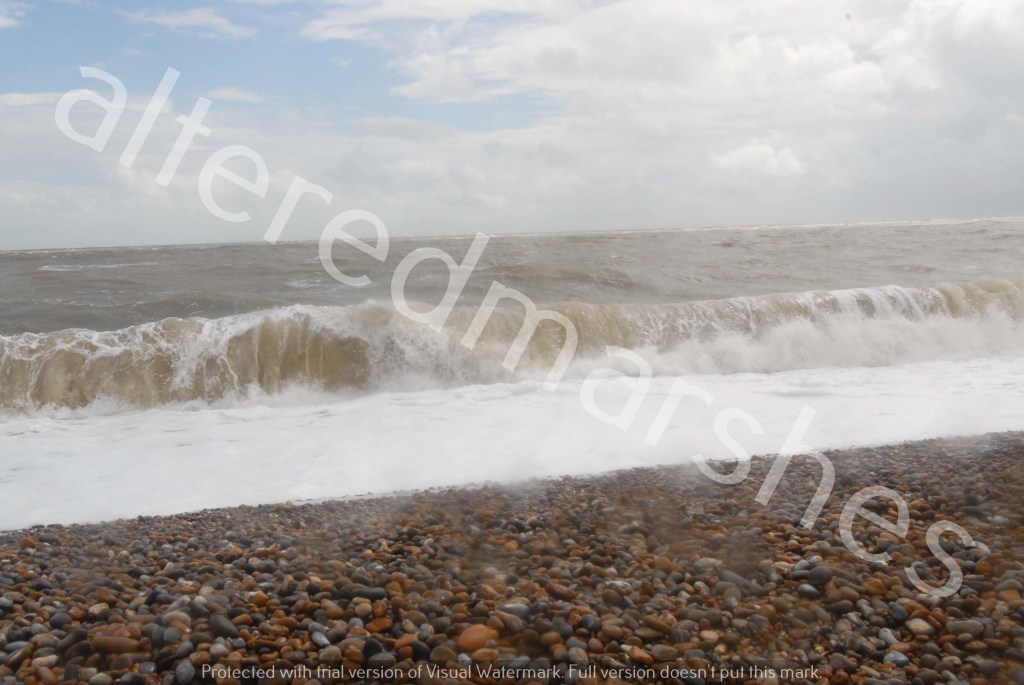
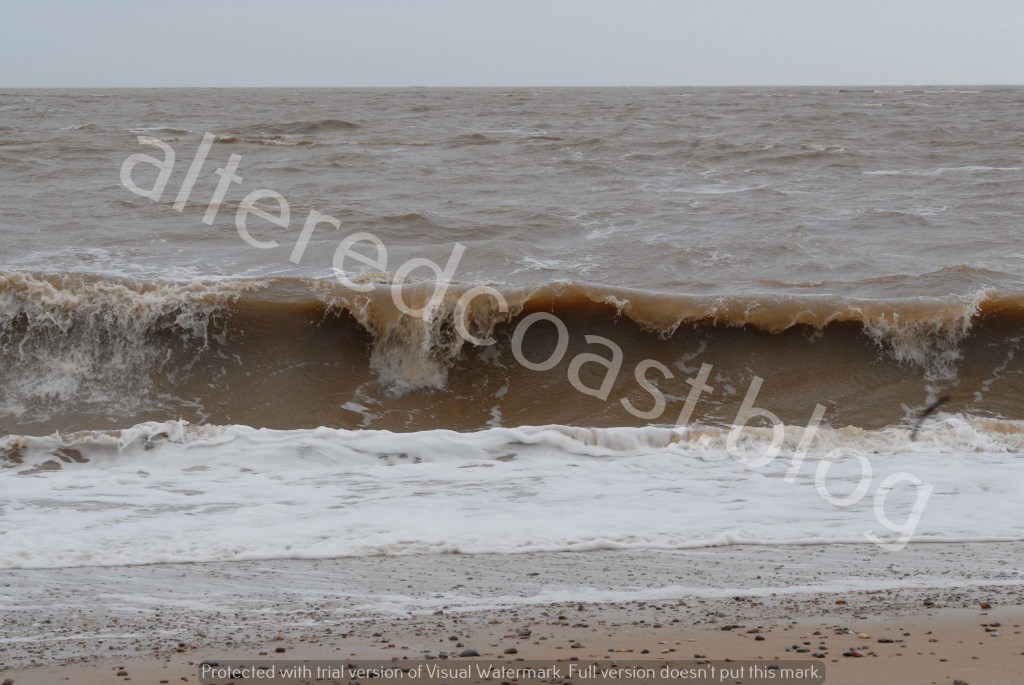
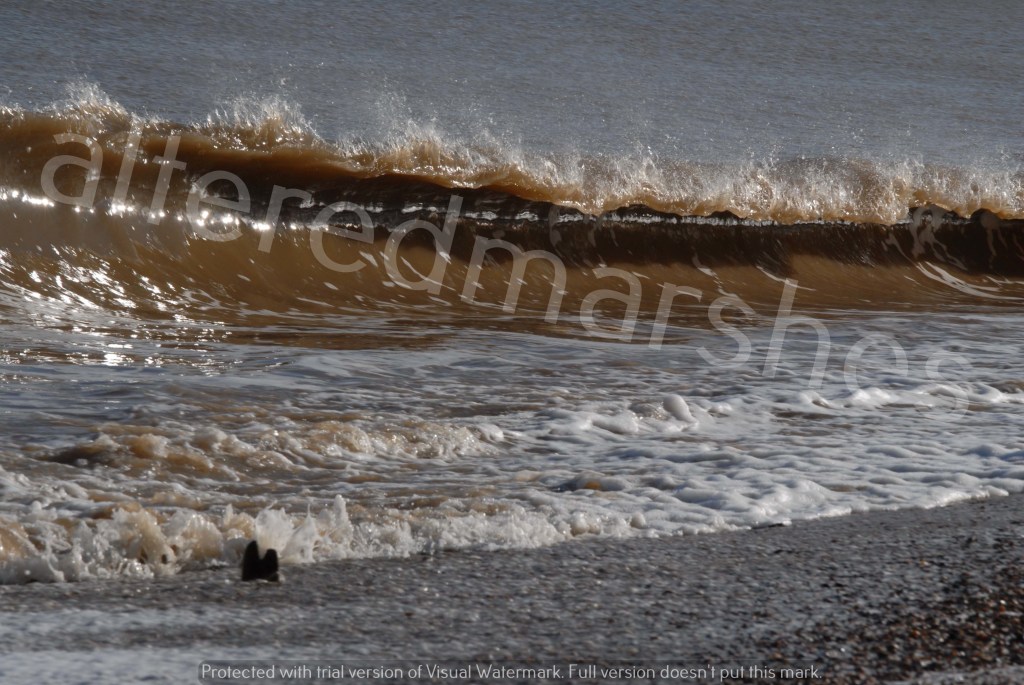
Waves at Pakefield Beach. March 29th 2024

In the days before the storm, observers, noticed the tides were not completely leaving the estuaries, before the next tide came in. It was also said the motion of the sea seemed strange, and there were concerns about winds. In parallels with today, concerns exist about the robustness of clay embankments and flood warnings regularly refer to the tide locking affect, when the previous tide is preventing from leaving as the next high tide comes in.

The wildness of the sea, came crashing through people’s doors without warning on the night of 31st January 1953. The magnitude of a storm of such severity invokes a constant tension between balancing the perception that coastal conditions can be made measurable and manageable. With the awareness that the enormous violence of storms makes them unpredictable, with communities increasingly aware of the restless, unruly neighbour, that dominates the coast.

Waves breaking on shoreline at Pakefield Beach. 29th March 2024

The insights from Pollards book that describe the behaviour of the sea before the night of the storm, suggest that perhaps part of remembering the storm surge of 1953, is a realisation that there are natural systems and processes, the strength of which we do not totally comprehend. Phenomenon we can never totally get the measure of.

The characteristics of the 1953 storm described above, describe the basic meteorological conditions for the storm. But they don’t describe the human story of how communities comprehend the feeling of the raw fury of the sea and its indifference. People who lived through the 1953 storm, convey the sense that a grave injustice surged through streets once thought familiar and safe. Leaving a tragic, indelible memory of broken homes, boats and dampness in the walls that cannot be removed.

The 1953 storm was a severe assault on the coastline and the people and animals that live along it. Storms and high seas have plagued the North Sea Coastline for hundreds of years. In 2013, a storm which equalled if not exceeded the extreme conditions in 1953, hit the North Sea coast, only this time damage was not as severe as defences and warning systems were much more advanced. But on the dynamic, storm driven, East Anglian coastline, it is still perhaps, the unknown power of storms, indifferent to their effects, which prove that you can never underestimate the power of the sea.

Waves breaking on Orfordness Beach. 7th August 2021

Sea State – Tides Surges and Weather

A wave breaking on Minsmere Beach in Suffolk, October 1st 2022

This discussion will look at tides and surges to consider whether the data suggests the presence of conditions likely to cause beach erosion. This will follow-up a previous debate concerning big vs small erosion events, that looked at the transformation of Thorpeness beach, below North End Avenue between 27th August and 1st October 2022.

Values from Spring and Neap Tides will be examined. Spring Tides occur during Full and New Moon, when the Sun and moon align directly with the earth, this considerably increases the height of the tide. Conversely, when the sun and the moon are at 90 degrees, to the earth, a Neap Tide occurs, with an especially small range. Both Spring and Neap tides occur once a fortnight.

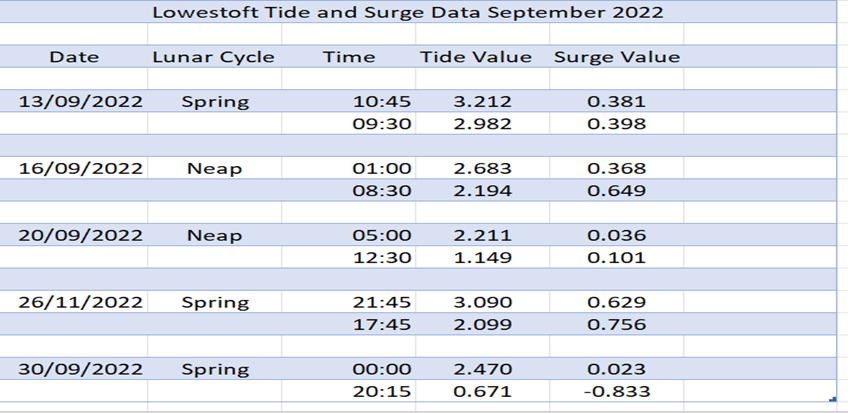
Data for five dates selected in the table below, show in the first line for each date, the highest tide value and in the second line the highest surge value. One 13th September the highest tide value is 3.212 metres, and the highest surge value, 0.398 metres. The surge (residual) as it is called is calculated from observed sea level value minus predicted sea level, for the time they occurred.

Data obtained from the National Tidal and Sea Level Facility, provided by the British Oceanographic Data Centre and funded by the Environment Agency. The source is the Port, P024 at the site of Lowestoft, with the Latitude of 52.47300 and Longitude of 1.75083 with the start date of 13th September 2022-00.00.00 and end time of 23:45:00 for each date analysed. The Contributor was the National Oceanography Centre, Liverpool and data refers to Admiralty Chart Datum (ACD).

One question to consider is whether surges are independent phenomenon that form as a result of particular conditions. For 13th September, a Spring tide, the surge occurred 1 hour and 15 minutes before High Water. However, it could be said surges originate from the environment at the time, separately from the lunar cycle. On 16th of September, a Neap tide, the highest surge value is 0.649, the third highest surge value in the data above. The surge occurred on a falling tide, at 8:30 am, with a tidal value of 2.194 recorded. The highest tide value occurred 6 and a half hours earlier at 1:00 am and was recorded as 2,683, with a smaller accompanying surge of 0.368. On 26th September a Spring Tide of over 3 metres was recorded, but the two surge values are also both elevated. The highest surge value of 0.756 occurred at 17:45, four hours before high water, with another reasonably high surge of 0.629 recorded at 21:45 at the time of high water.

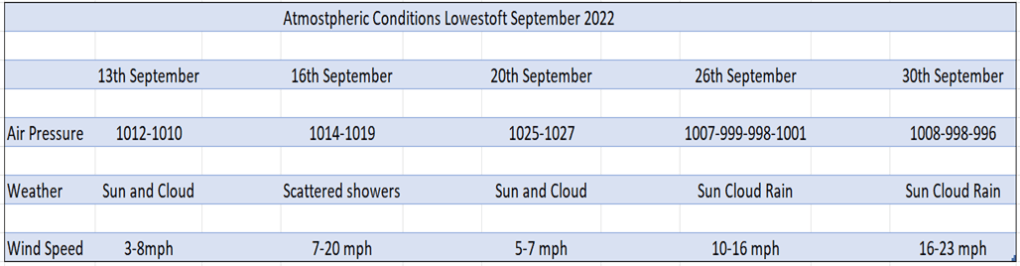
It is also useful to look at the meteorological conditions at the time the tide and surge values were recorded. A rise in atmospheric pressure causes a 1cm fall in sea level, low pressure causing a rise. As a rough guide, air pressure of 1022 mbar is considered to be High Pressure, 1022-1009 mbar Normal Pressure and 1009 mbar and below, Low Pressure. The table below shows atmospheric conditions for Lowestoft in September 2022.

Data of mbar values and weather conditions obtained from the website https://www.timeanddate.com/weather/uk/lowestoft/historic?month=9&year=2022

For 13th– 20th September, Normal or High Pressure was recorded with air pressure fluctuating around 1012-1027 mbar. However, on 26th and 30th September, there is a noticeable drop in Air Pressure, from 1007 mbar to 998 mbar on the 26th and 996 mbar on the 30th. A significant drop in pressure can indicate storm conditions. On the 26th, air pressure at the time the highest surge was recorded was 1000 mbar and by the time of the highest tide it was 1001 mbar, the drop in Low Pressure recorded earlier in the day. On the 30th, air pressure at the time the highest tide was recorded was 1008 mbar and by the time of the highest surge of 0.833 it was 998 mbar.

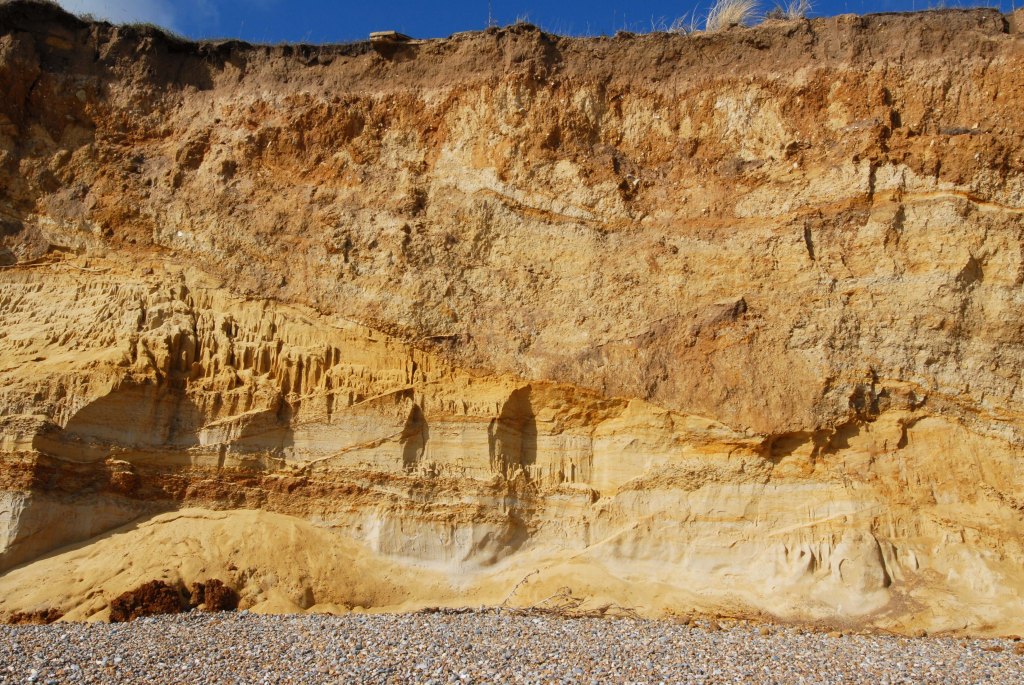
The tide and surge data in this discussion, offers some evidence that certain tides were elevated during September, and it can be seen surges can occur separately from High Water on both Spring and Neap tides. However, for three of the dates considered, it was not obvious conditions were present to produce a surge. But for dates, towards the end of September, noticeable drops in low pressure and stronger winds could have generated surge conditions.  Tide and surge values in September and atmospheric conditions don’t provide a causal link between beach changes at Thorpeness and elevated sea states. However, values for 26th and 30th September could suggest an agitated sea state that could move beach material. Though it should be noted tide and surge measurements at Lowestoft are recorded an hour or two before they arrive at Thorpeness. Though it is interesting to consider whether photos of the cliffs at Thorpeness taken on 1st October, show a high-water mark at the top of the cliff. Perhaps concluding the examination of data, atmospheric pressure and the evolving movement of the sea and the land it interacts with.

Cliffs showing signs of erosion, with a possible High Water Mark. Thorpeness Beach, below North End Avenue October 1st 2022

Tides and Surges

This discussion will travel down the east coast with the tides and surges of East Anglia and will consider how the features of the North Sea influence tidal patterns. Along the way, it will also consider the tendency of surges to occur around 3 to 5 hours before peak high tide.

The shape and position of the North Sea can be said to contribute to the tidal ranges on this coastline. At its northern end, the North Sea links to the North Atlantic through a large channel that passes by Scotland and Norway. At its southern end, the North Sea squeezes through a narrow strip to the English Channel. The tidal system is created predominantly by astronomical, semi-diurnal tides from the Atlantic. Semi-diurnal tides are those which see two high and two low tides of roughly equal size every lunar cycle. Tides rotate around centres, known as Amphidromic Points, and thanks must go to the Environment Agency in providing information about these points, of which there are three in the North Sea. The 1st Amphidromic Point is located in the Southern North Sea near the English-channel, the 2nd in the centre of the North Sea and the 3rd, close to the coast of Norway.

At the centre of Amphidromic Points, the sea is almost stationery with barely any tide. However, tides circulate round these points, as Kelvin waves in a counter-clockwise direction, southward down the coast of East Anglia, every 12 hours, 25 minutes. Each line of the Amphidromic Point represents 1 hour and 2 minutes of travel by a tidal wave, and the furthest from the centre of the Amphidromic Point, higher the tide. For example, at Immingham, placed further away from the centre of the Amphidromic Point in the centre of the North Sea average tide height is around 6-7 metres. Whereas at Lowestoft, located very near the Amphidromic Point in the southern North Sea, average tide height is around 2.5 metres.

The North Sea, is said to be a splendid sea for storm surges.  

(Heaps, 1983).

The position of the North Sea attracts extratropical storms which pass from west to east with the capability to generate energy in the sea. A ‘Storm Surge’, can be formed by atmospheric level pressure acting on the surface of the sea, for example, a 1 millibar reduction in air pressure causes a 1 cm rise in sea level. Another contributory factor, is the effects of wind blowing over large areas of shallow water, with the depth of the southern North Sea said to be around 35 metres.

A‘ storm surge’ is therefore a transitory increase in sea level originating from a depression generated by a weather system. The shape of the North Sea influences this process, because when a surge travels down the coast in a southerly direction, it is accentuated by the concentration of storm energy water being driven through the narrow funnel into the English Channel.

A related concept is the extent to which surges occur a few hours before peak high tide. In a paper by K. J. Horsburgh  and C. Wilson, data from 5 tidal gauges, spaced equally along the North Sea Coast at Aberdeen, North Shields, Immingham, Cromer and Sheerness, found the surge frequency to be around 3-5 hours before high tide. This assertion can be tested by looking at significant surges on the Suffolk coast, such as during the storm on 5th/6th December 2013 and the surges that accompanied high tides in January 2022.

Regarding the 2013 surge, it is interesting to note that with a large event like this, it could be problematic to focus on data from 5 specific sites, as you only know when a surge impacted these areas at a given time, whereas outside of these focus points data could show the surge at some locations arrived within between 2 hours or 30 minutes before High Water.

Figures in the table below show peak tide levels and maximum surge heights at Lowestoft for 5th and 6th December 2013 and the 6th December 2022.

Data obtained from the National Tidal and Sea Level Facility, provided by the British Oceanographic Data Centre and funded by the Environment Agency. The source is the Port, P024 at the site of Lowestoft, with the Latitude of 52.47300 and Longitude of 1.75083 with the start date of 05Dec2013-00.00.00 and end date of 23:45:00 for each date analysed. The Contributor was the National Oceanography Centre, Liverpool and data refers to Admiralty Chart Datum (ACD).

The table shows that peak high tide on 5th December 2013 was at 22:30, but the maximum surge height of 2.179 was recorded at 22:00, half an hour before peak high tide. Interestingly, on 6th December 2013, whilst the peak high tide of 4.228 was recorded at midnight, the maximum surge height of 1.856 metres was recorded at 03:15, over 3 hours after peak high tide. Elsewhere during the December 2013 surge, a report by Kenneth Pye Associates Ltd, commissioned by the Alde and Ore Association, gives figures from the Environment Agency tidal gauge at Orford Quay in the Alde Ore Estuary. On 6th December 2013, maximum high water was 3.06 m OD at 01:45 am around 71 minutes before predicted High Water and the surge was 1.66 m.

However, in relation to the high tides and surges of January 2022, figures roughly concur with K. J. Horsburgh and C. Wilson. On January 18th 2022, the surge of 1.2 metres, that travelled up the Alde Ore estuary arrived around 2 hours before normal spring high tide. Similarly, during the high tide and surge on 30th January 2022, peak high water was recorded at 06:15 in the morning with tide height of 3.659 and a surge height of 1.370 m, but the highest surge occurred 3 hours earlier at 03:45 am with a tide height of 3.391 and surge height of 1.728 m. All data is from the British Oceanographic Data.

Discussion of these figures of surges in December 2013 and in January 2022, should in no way detract from the in-depth, analytical work undertaken by K. J. Horsburgh and C. Wilson. Instead, it just serves to demonstrate how the processes of tides and surges are both fixed describable features and fluid dynamic elements. As our journey concludes with tides and surges of the North Sea, it has revealed the complexity of the everchanging forces that move the water in the ocean.