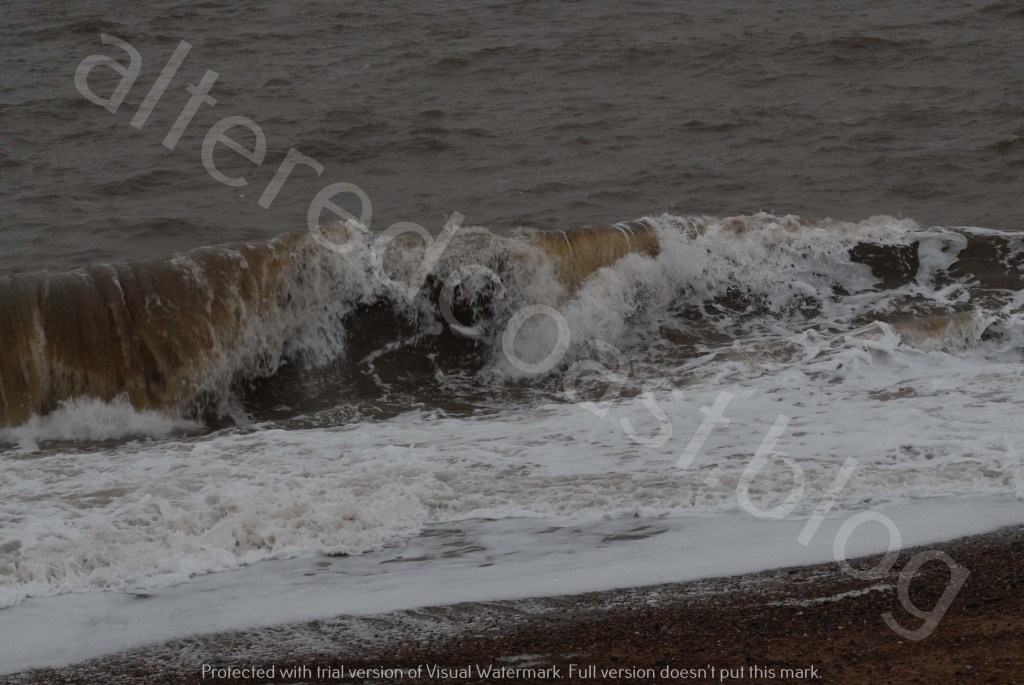
Winter Erosion on the East Anglian coast for 2025 into 2026 has been active with several instances of severe erosion. Hemsby suffered a devasting large-scale demolition of properties, with further demolitions to come. Thorpeness, and Happisburgh also experienced tragic loss of homes, with threats of further property loss. Showing the border between land and sea to be a dynamic, and at times destructive interface. Causing damage as well as revealing links to the past. Like sea glass and shards of pottery dating back to 1920’s in a void formed underneath Hunstanton promenade.
A large storm surge on 1st and 2nd January caused around 10 metres of dune loss at Hemsby. With severe loss of beach material and cliff retreat occurring at Thorpeness. Additionally, damage to structures saw the formation of a large void in the promenade at Sheringham. The concrete access ramp at Happisburgh was damaged and taken out of action and significant beach lowering exposed the Time and Tide bell.
Spray from waves was observed on a few occasions to pool in the car park behind the flood defence at Southwold. With large puddles of rainwater also seen to accumulate adjacent to the sea water spray. Sea water also accumulated on top of the dunes at Sizewell following the surge on 1st and 2nd January 2026. Substantial dune retreat has occurred at Sizewell, with the formation of Scarps and blocks of dune and vegetation pulled from the dunes.
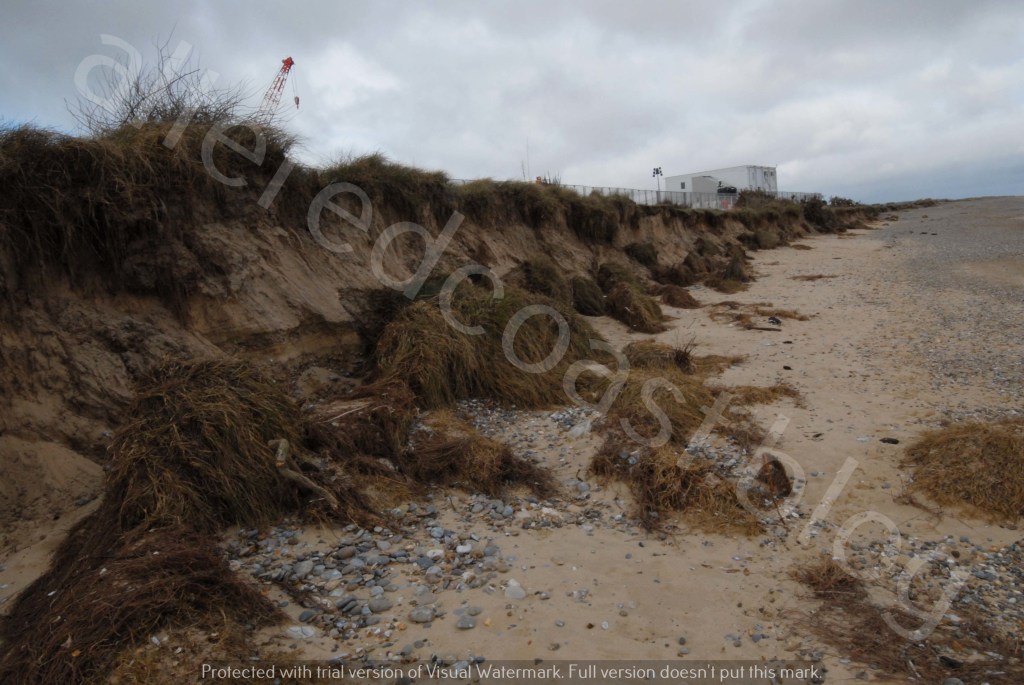
Damage to the dunes has occurred near the construction site for Sizewell C. Creation of Scarps causing dune erosion has also occurred at Walberswick.
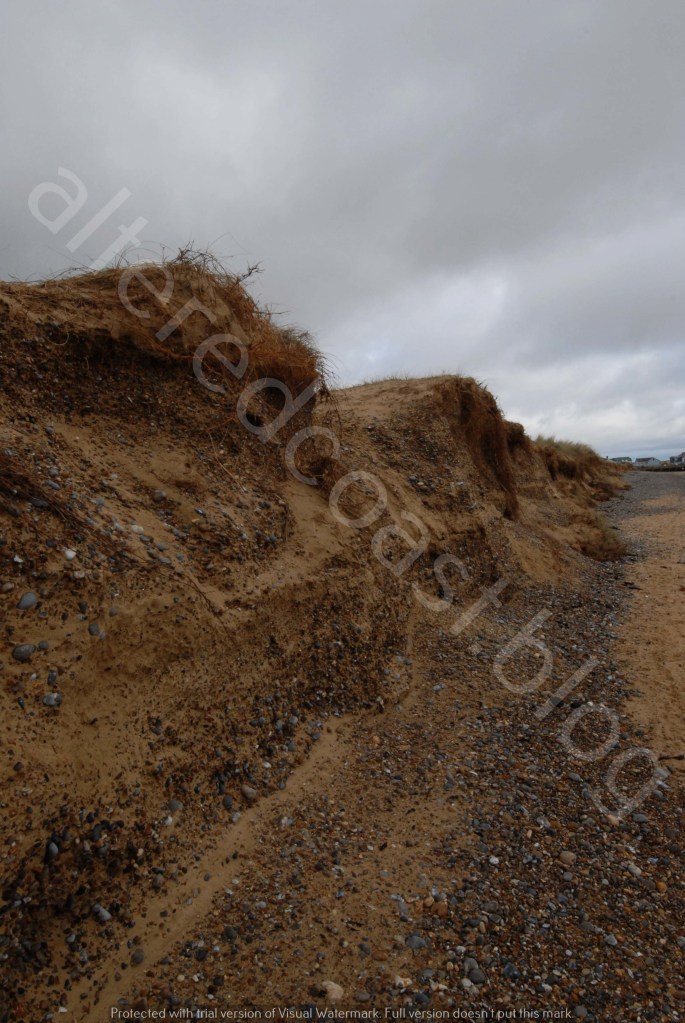
Substantial cliff retreat brought the cliff edge to within 40 metres of Bawdsey Radar Museum, with coastal erosion occurring around East Lane and the coast along to Bawdsey Manor. Bawdsey Haven Yacht Club, at the mouth of the River Deben in Suffolk Cliff also experienced erosion concerns. Cliff falls also occurred at Walton-On-The-Naze and Covehithe. However, locations such as Pakefield got through winter relatively lightly with just a few instances of cliff slumps and wave scour. It is thought this could be due to the ness at Kessingland migrating slowly north.
This discussion will look at the everchanging active interaction between sea, sediment and hard structures. As locations that seem stable, can still show low levels of scouring into shingle.
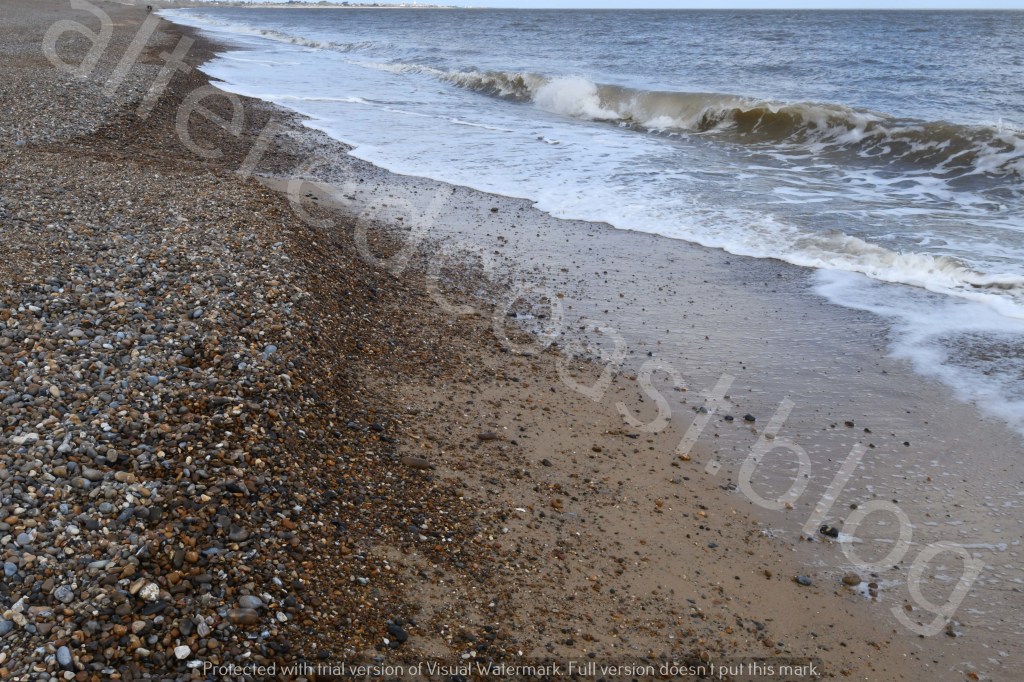
Or hint at recent high tide lines above high banks of shingle.
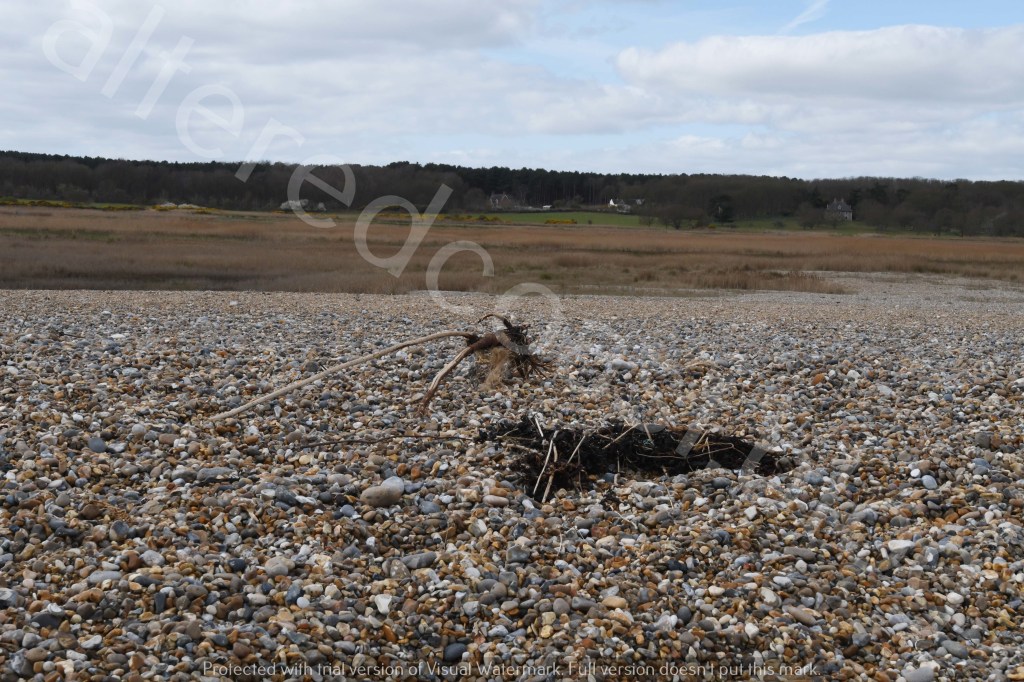
Or stripping of beach levels to reveal world war defences.
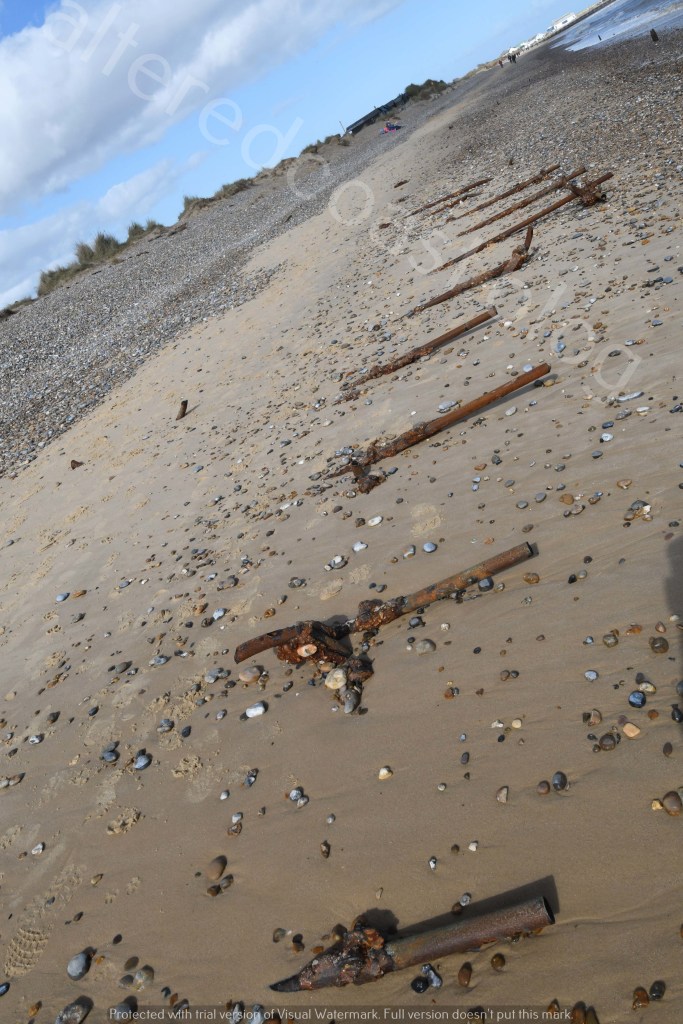
But how does the regular re-working of a beach shift to powerful conditions that can lead to severe erosion or a sudden forceful break. Is it simply that strength in a wave due to a storm, applies a greater level of pressure which can initiate substantial increases sediment movement. Or alter or impact a hard structure.
To consider these points, this discussion will look processes that occur in what is known as the Swash Zone, the area where waves wash up and down the beach. In this location, subject to profile influences, energy can be is dissipated when a wave breaks. It could be possible to consider how this energy, or Aggregate Surplus Strength is expended in normal conditions, and how it is released should wave conditions be stronger. Perhaps because of distant or nearby meteorological conditions.
In relation to dunes, it is thought that as forceful waves clash with a frontage, they can create friction as they retreat. Sea water stresses can excavate lumps of dune and vegetation. Structure can be sustained in the early stages by vegetation, but sustained wave action can displace it with action to drag out roots releasing sediment. Cliff erosion can be caused by wave action or rainwater seeping into its structure.
In the case of a sea wall, the Aggregate Surplus Strength of a wave can be constrained within its impact against a hard structure. In addition, factors such as faster wind speeds might generate higher wave conditions and enhance faster suspension of sediment in front of sea walls. Hard defences are built to prevent flooding of land behind them, but they cannot shift like fluid dynamic beaches.
The Aggregate Surplus Strength of waves can vary with actions of turbulent sea water to strip sediment and lower beaches, often transitory, as systems follow tidal cycles and sea states. In brief episodes or over longer time scale, processes such as Liquefaction can occur. Tensions between individual sediment grains can break down, due to increases in pore water pressure between the grains. This can create a complete flowing mass of sediment and water. Such a unitary flow, once set in motion, is likely to the transport sand away from the beach. A possible consequence, in relation to sea walls can be Toe Scour. A trench can form along the base of a structure, which could lead to undercutting, if beach levels reduce below the base of a hard defence.
In relation to the void under the promenade at Sheringham, an engineer working at the site, believes formation of the void could relate to how the hard structure was cast on chalk bedrock over 70 years ago. Sea water could have dissolved the chalk, causing sand and gravel to be released from behind the sea wall.
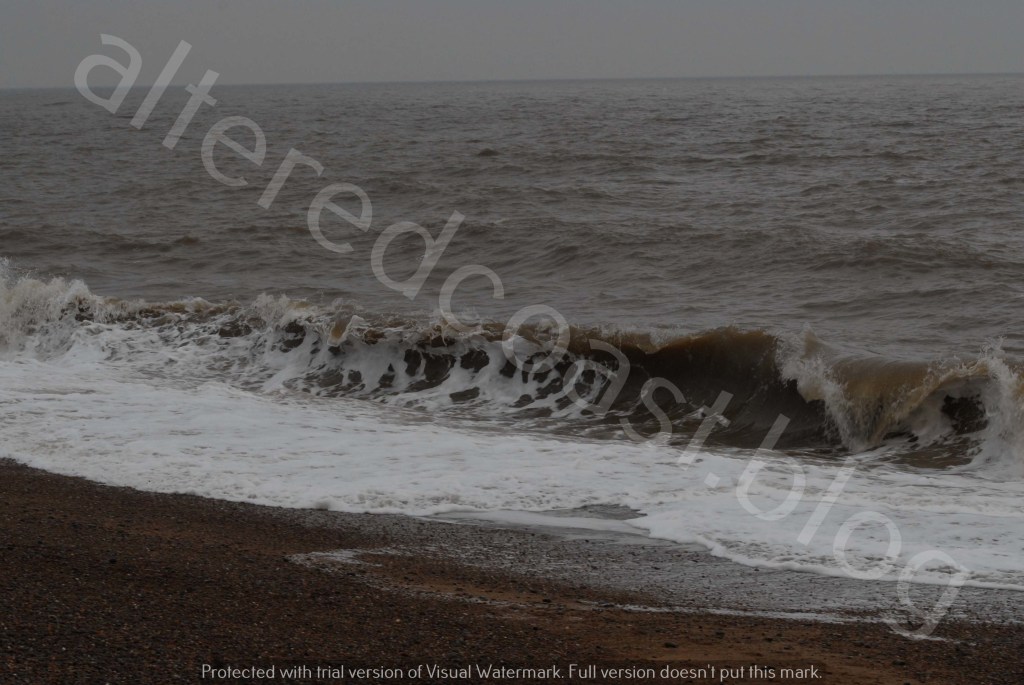
As winter erosion has shaken the East Anglian coast, with instances of people and structures, shaken out of their foundations. It could be worth considering the messages of the winter profile marks on the coast. To ask if winter erosion represents a profile readjustment and consider what might be stirring the big brown waves of the North Sea. To consider the implications for beaches, hard structures and people on fragile coastlines.


Leave a comment